Ksamil for a Team Workation: Basing a Group for Remote Work or a Project Retreat

Some of the best work happens when a team gets out of the usual setting and into one space together for a focused stretch. A founder group hammering out a launch, a small startup team building a product, a circle of friends with a side project, all of them benefit from a few weeks somewhere that combines room to work with a reason to step away from the screen. Ksamil, on the southern tip of Albania’s Riviera, turns out to be a quietly excellent place to do exactly that.

It is affordable, it is beautiful, the pace is slow, and it sits right on some of the clearest water in the Mediterranean. This guide covers what it actually takes to base a working group in Ksamil: connectivity, getting there, how a workday looks, what to do when you close the laptops, costs for a group, and how to set the whole thing up.
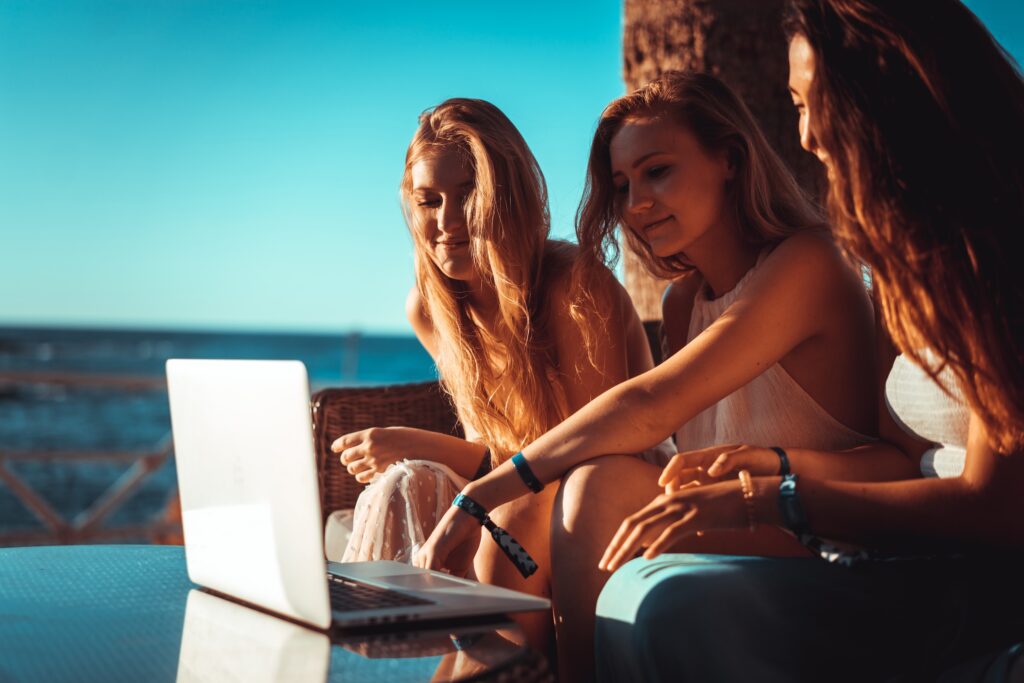
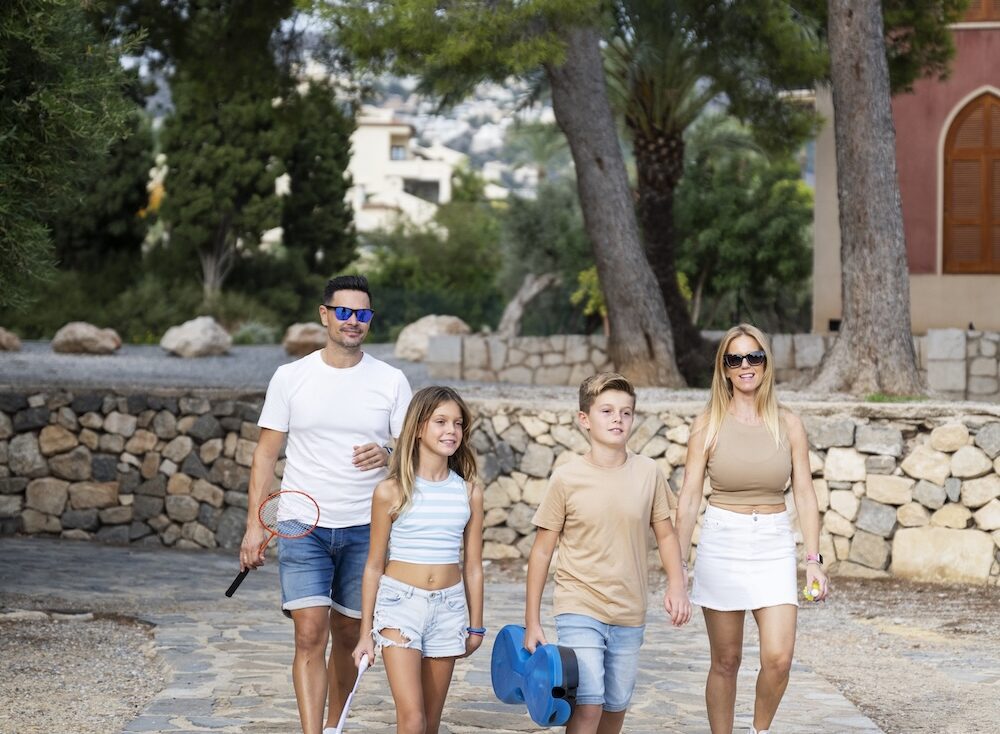
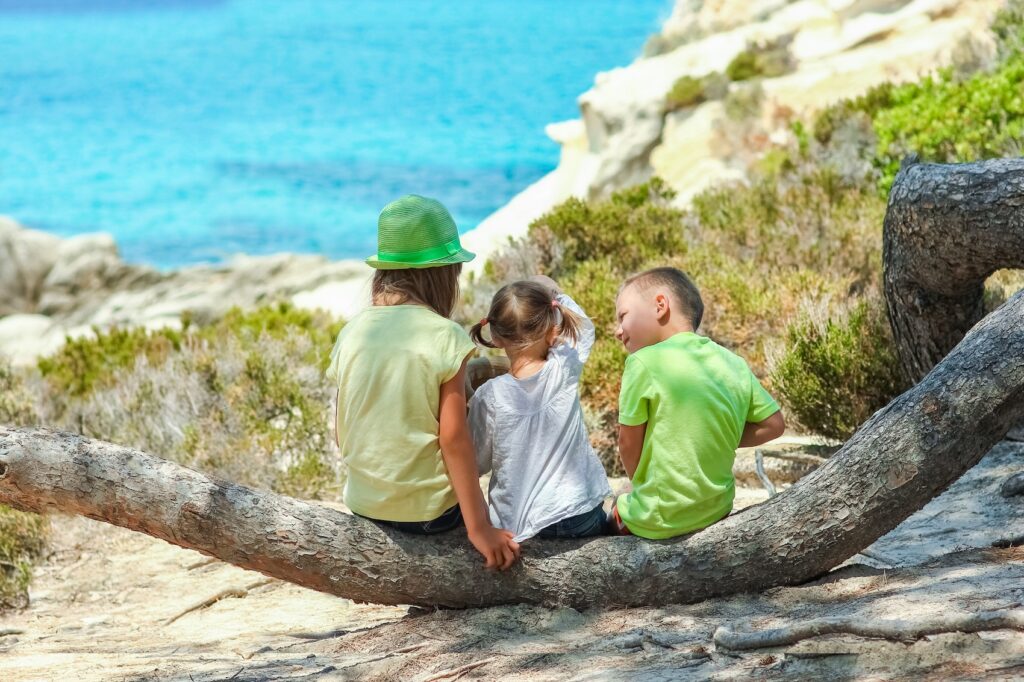
Girls trip working remotely from Ksamil

Why Ksamil works for a working group

A few things make Ksamil a good fit for a team stint rather than just a holiday:

It is affordable. Albania remains one of the best-value destinations in Europe, noticeably cheaper than Greece or Croatia for comparable coastline. That stretches a team’s budget a long way, whether the trip is company-funded or split between friends.

The pace helps focus. Ksamil is a small village, not a party city. Outside peak summer, it is genuinely quiet, which is exactly what you want when the goal is deep work punctuated by real breaks rather than constant distraction.

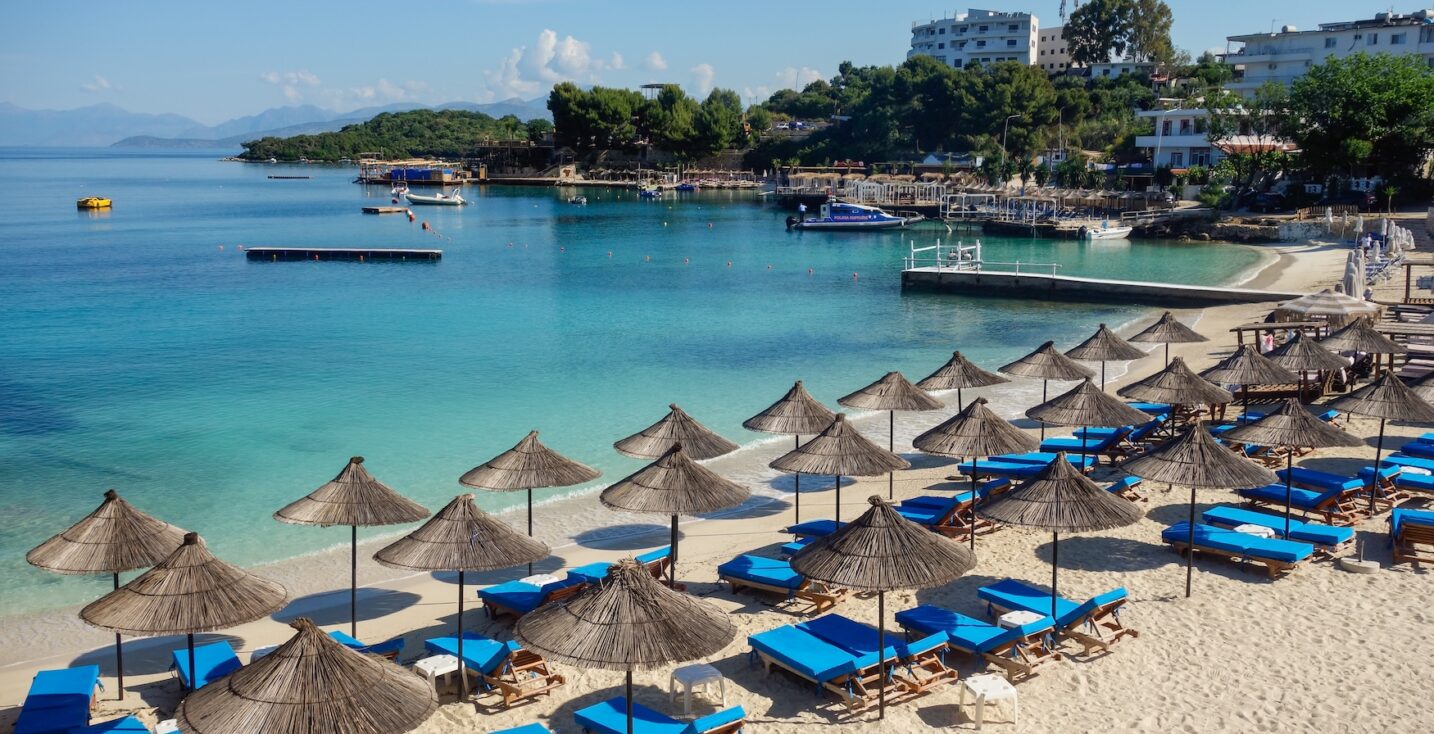
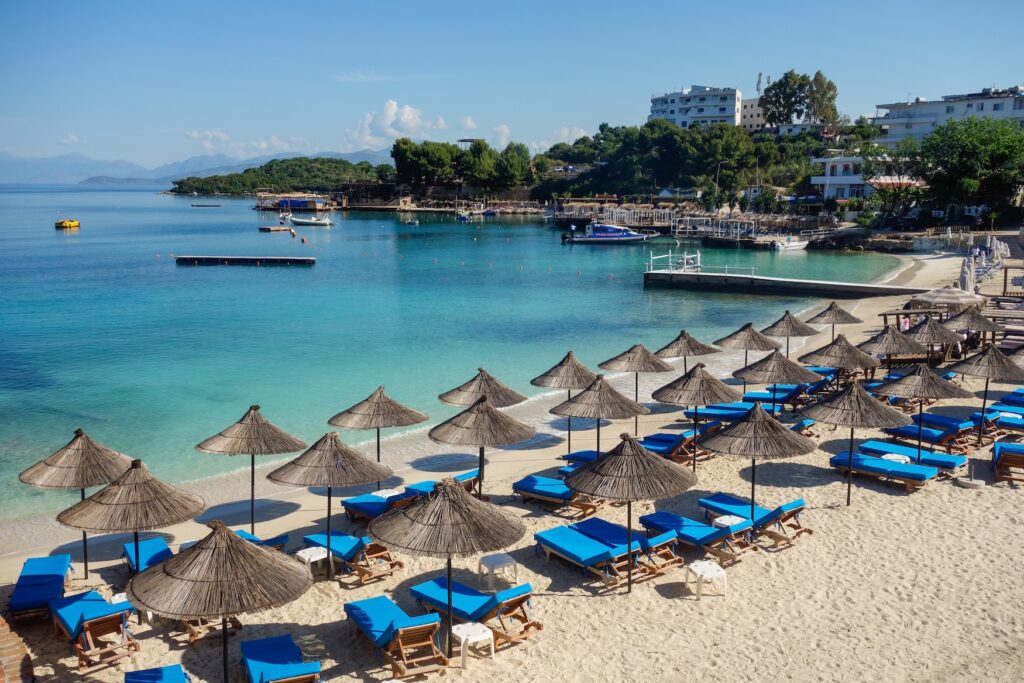
The setting resets people. There is something about closing the laptop and walking five minutes to turquoise water that does more for team morale than any office perk. The beaches, the islands, the long seafood dinners, they give a group ways to bond and recharge that an ordinary location cannot.

It is easy to combine work and downtime. Mornings of focused work, an afternoon swim or a sunset dinner, a weekend day trip to ancient Butrint or the Blue Eye spring, the rhythm of a productive workation comes naturally here.

The practical reality: connectivity

Let’s be honest about the most important factor for any remote-work trip: internet. For a team that needs to be online to function, this is the thing to nail down before booking anything.

Albania’s connectivity has improved a lot and the country is increasingly popular with remote workers, but infrastructure still varies by location, so it is worth confirming specifics rather than assuming. Mobile coverage is generally good in Ksamil village and along the main beaches, and local SIM cards with generous data packages are inexpensive and easy to pick up in nearby Saranda, which makes a solid backup for any team. For a working group, the sensible move is to confirm the internet setup directly with your accommodation before you commit, and to have mobile data as a fallback for video calls and critical work.

Plan for the kind of work your team does. If you are mostly writing, designing, and building with occasional syncs, Ksamil handles that comfortably. If your days are wall-to-wall high-bandwidth video calls, verify the connection carefully in advance and line up that backup.

Getting your team there

Ksamil has two main routes in, and which suits your group depends on where you are coming from.

Via Corfu (usually easiest). Fly your team into Corfu, Greece, which has plentiful direct flights from across Europe in season, then take the short ferry across to Saranda (as little as 30 minutes on a fast boat) and finish with a 20 to 30 minute taxi or transfer to Ksamil. Remember it is an international crossing, so everyone needs their passport.

Via Tirana. Fly into Albania’s capital and drive south. It is a longer haul, around five and a half hours by road, but it works if you want to see more of the country or are coming outside the summer ferry season. A rental car or two also gives your group freedom once you are there.

Once you arrive, Ksamil is walkable, so the group does not strictly need cars day to day, though having at least one vehicle makes weekend day trips and Saranda runs much easier.
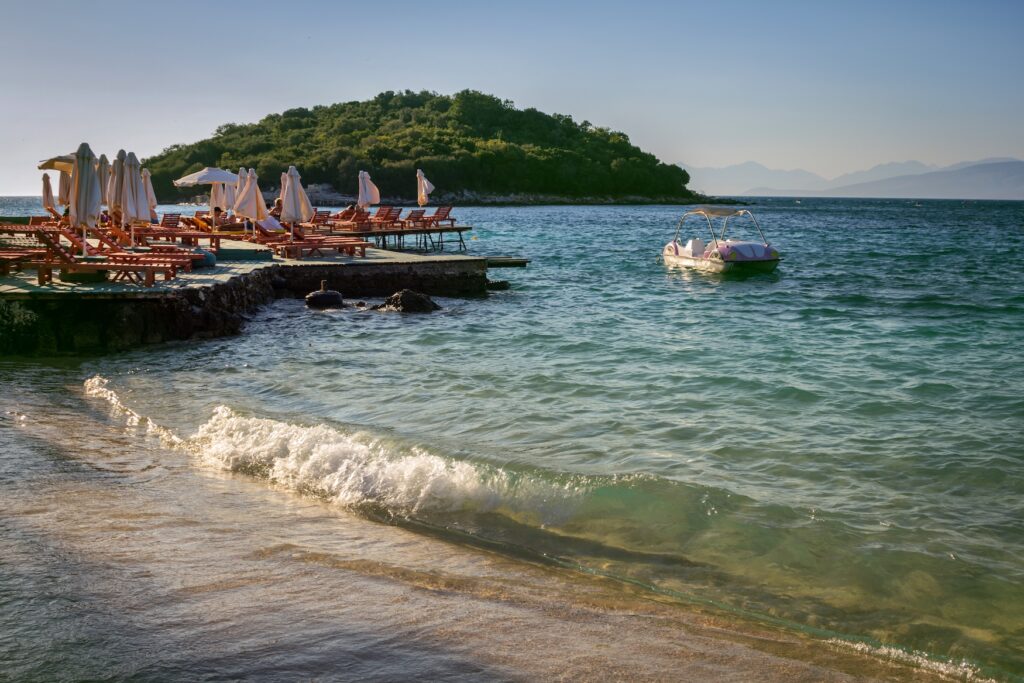
Beautiful photo of the sea waves

What a workday in Ksamil looks like

The appeal of a workation is the blend, and Ksamil makes it easy to structure days that get real work done without feeling like a grind:

Mornings for focus. Start early while it is cool and quiet. The hours before the beaches fill up are ideal for heads-down work, and an early swim or a coffee on the terrace makes a far better start to the day than a commute.

A proper midday break. Step away for lunch and a swim. The water is a five-minute walk from the center of the village, and even a short reset by the sea does wonders for an afternoon’s productivity.

Afternoons and collaboration. Regroup for the more collaborative work, planning, reviews, building together. Having everyone under one roof means you can shift between solo focus and group sessions without booking meeting rooms or coordinating across hotels.

Evenings to bond. Wind down with a sunset dinner, cook together, or just sit out as the light goes gold over the Ionian. This is where the team-building actually happens.

For longer stays, build in a full day off for a day trip, Butrint, the Blue Eye, a boat trip out to the islands, to keep everyone fresh.

Stepping away from the screen

Part of what makes a Ksamil workation work is how good the breaks are. When you close the laptops, the area gives a group plenty to do together: swimming and snorkeling in the calm shallow water, kayaking or paddleboarding out to the offshore islands, long seafood dinners on west-facing terraces, and day trips to the UNESCO-listed ruins of Butrint or the vivid Blue Eye spring. There is even a day trip to a second country on offer, since Corfu is a short ferry away. These shared experiences are what turn a few weeks of co-working into a trip the team remembers.

Cost for a group

For a group, Ksamil’s value really shows. Beyond the low general costs, the smart move is sharing one large space rather than booking separate hotel rooms. A single villa split across a team works out far cheaper per person than individual rooms, and a kitchen means you can cook some meals together instead of eating out for every one, which adds up over a few weeks.

To keep the budget down further, consider timing the trip for shoulder season (late spring or September), when accommodation can be roughly half its peak-summer rate and the town is quieter and better suited to focused work anyway. The deep offseason is cheaper still and even calmer, though many restaurants and beach businesses close, so a self-catering setup matters more then.

A note on visas for longer stays

For a typical few-week project trip, most Western nationals can enter Albania visa-free for up to 90 days, so no special paperwork is needed. If anyone on your team wants to base in Albania much longer, the country has introduced a remote-work residence pathway (often called a digital nomad visa) for stays beyond the standard tourist window. Immigration rules change, so anyone considering a long stay should check the current requirements on Albania’s official channels before making plans.

The right base for a working group

Here is where the kind of place you choose makes or breaks a team trip. A group needs more than beds: you need shared spaces to work, room to spread out so people are not on top of each other all day, somewhere to gather in the evenings, and the ability to cook and live together comfortably. Hotel rooms scattered across a building do none of that.

Villa Papa is built for a group exactly like this. With four bedrooms and four bathrooms split across an upstairs unit and a self-contained downstairs master, a team has space to spread out and retreat for focus, while still living together. Around the home there are tables, chairs, sofas, and a few small desks to set up laptops, plus lounge chairs for the kind of relaxed, casual work that does not need a desk at all. Two fully equipped kitchens and two washing machines make a multi-week stay genuinely practical, and the big backyard, private pool, and shaded lanai give the group somewhere to gather, eat, and decompress together at the end of a working day. WiFi is provided for the group’s connectivity. It sits a five-minute walk from Ksamil Beach, so the midday swim and the sunset dinner are always close, and on-site parking behind a security gate makes having a car for weekend trips easy.

The villa is advertised for up to ten adults, so it comfortably suits a founder group, a small startup team, or a circle of friends taking on a project together, and booking directly for a longer stay is a straightforward, cost-effective way to set the whole thing up. It is too much space for a solo traveler, but for a group that wants to live and work under one roof for a few weeks, that is exactly the point.

Frequently asked questions

Is Ksamil good for remote work?

For a group, yes, especially outside peak summer when it is quiet and focused. It is affordable, beautiful, and walkable, with the beach and day trips for breaks. The key is confirming the internet setup in advance, since connectivity varies by location, and having mobile data as a backup.

What is the internet like in Ksamil?

Albania’s connectivity has improved and the country is increasingly popular with remote workers, but it varies by location. Mobile coverage in Ksamil village is generally good, and cheap local SIM data plans from nearby Saranda make a reliable backup. Always confirm the specific connection with your accommodation before a work trip.

How do I get a group to Ksamil?

The easiest route for most is to fly into Corfu, take the short ferry to Saranda, and transfer to Ksamil (about 20 to 30 minutes). Alternatively, fly into Tirana and drive south, roughly five and a half hours. Everyone needs a passport for the Corfu ferry, as it is an international crossing.

Do I need a visa to work remotely from Ksamil?

For a typical few-week trip, most Western nationals can enter Albania visa-free for up to 90 days, so no special visa is needed for short remote-work stays. For much longer stays, Albania offers a remote-work residence pathway; check current official requirements before planning.

When is the best time for a team workation in Ksamil?

Shoulder season (late spring or September) is ideal: warm weather, lower prices (often around half the peak rate), and a quieter town better suited to focused work. Summer is livelier but busier and pricier; the deep offseason is cheapest and calmest but many businesses close.

How much does a group trip to Ksamil cost?

Less than comparable Mediterranean destinations. The biggest saving for a group is sharing one large space instead of separate hotel rooms, plus cooking some meals rather than always eating out. Timing the trip for shoulder season cuts accommodation costs further.


For a team that wants to get real work done while genuinely enjoying where they are, a few weeks in Ksamil is hard to beat. Sort out the connectivity, base everyone in one shared space, and let the coast handle the rest.

Planning a team trip or project retreat? Find your dates at Villa Papa.
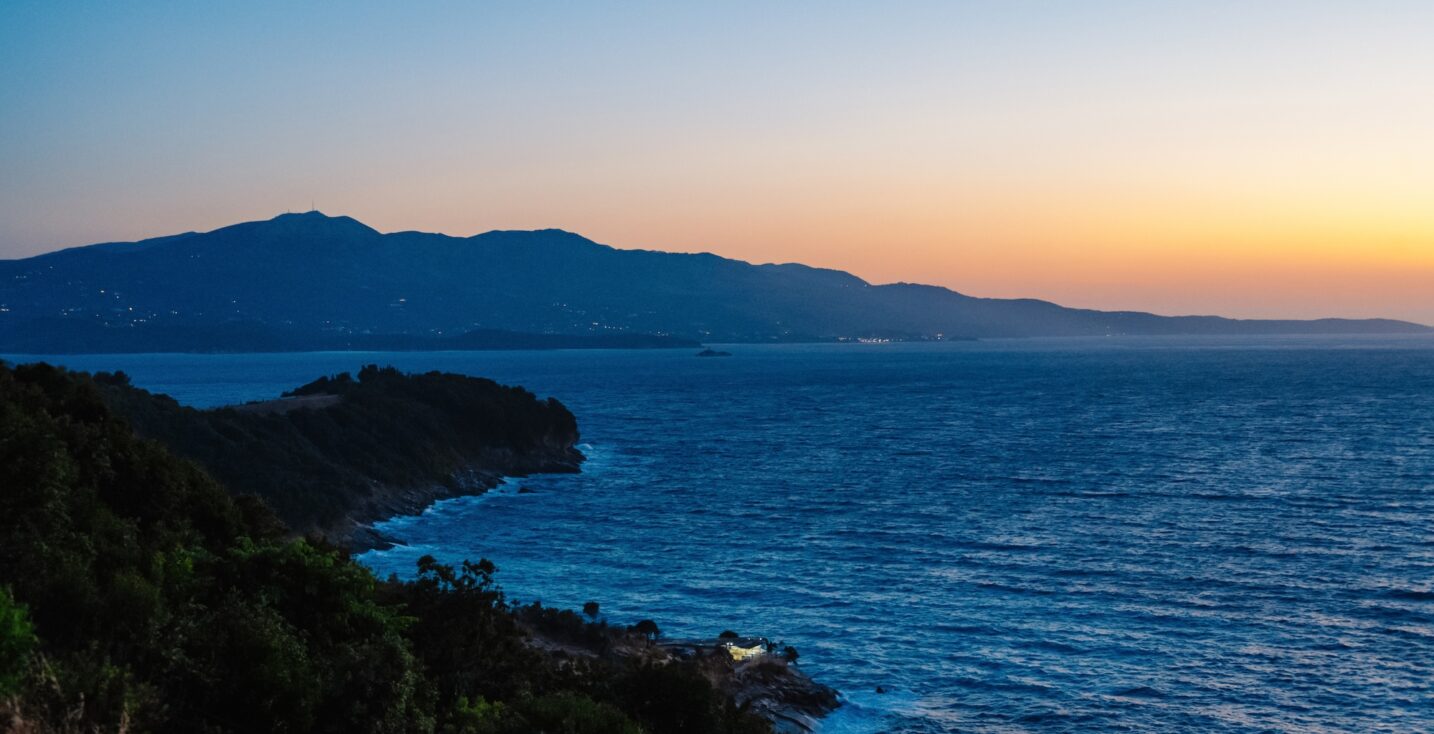
The Best Sunsets in Ksamil: Where to Watch and How to Make the Most of Them

Ksamil faces west. That single geographic fact is the reason its sunsets are so good. As the day winds down, the sun drops straight into the Ionian Sea, the water turns gold, the little offshore islands fall into silhouette, and on a clear evening the outline of Corfu floats on the horizon. For a lot of visitors, the nightly sunset becomes the highlight of the whole trip, the moment the crowds thin, the light softens, and the town slows down.

This guide covers the best places to watch the sunset in Ksamil, from beach bars to a hilltop castle to the water itself, plus a few tips to make the most of golden hour, whether you want it romantic, family-friendly, or simply unforgettable.

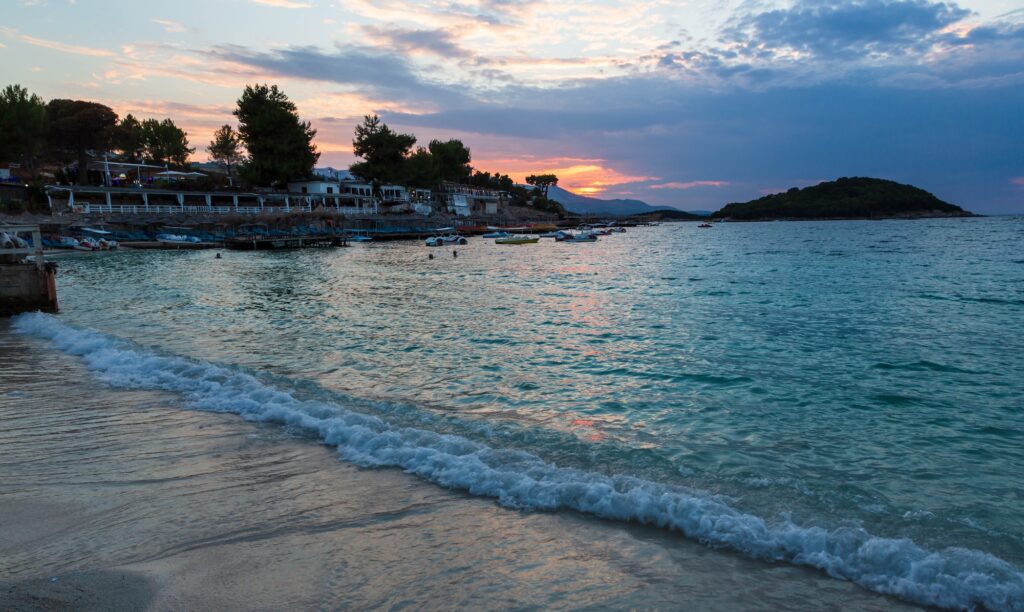
Sunset waning just beyond Ksamil beach

Why Ksamil’s sunsets are special

Because the town sits on a west-facing stretch of coast, almost the entire shoreline is angled toward the setting sun. That means you do not need to hunt for one secret spot; most of the beaches and seaside terraces deliver a beautiful view. The offshore islands add depth and silhouette to the scene, and Corfu in the distance gives it a sense of scale. The result is a sunset that feels expansive and uninterrupted, dropping over open water rather than behind buildings or hills.

The light also shifts with the seasons. Summer sunsets come late and warm, perfect for a long dinner that stretches into dusk. Shoulder-season and offseason evenings can be even more dramatic, with moodier skies and far fewer people sharing the view.

Where to watch the sunset in Ksamil

Along the beaches

The simplest option is also one of the best: pick a west-facing beach and stay into the evening. Many of the seaside bars and restaurants that line Ksamil’s beaches keep serving as the sun goes down, so you can settle in with a drink and watch the whole show from your sunbed or a terrace table. The central beaches give you the islands directly in front of you, while the quieter southern coves offer the same view with a calmer, more relaxed mood. A bonus of staying for sunset is that the daytime crowds have usually cleared out by then, leaving the beach far more peaceful than it was at midday.

The southern beach walk

For a more active way to enjoy golden hour, there is a lovely path along the southern beaches that locals and visitors walk at sunset. Strolling between the small coves as the light turns is a simple pleasure, and you can end wherever a bar or terrace catches your eye. It is the kind of unhurried evening ritual that sums up what Ksamil does best.

Albania riviera. Beach on coast of Ionian Sea in Albania, Ksamil, near Greece island Korfu. Shpella e Pëllumbave beach
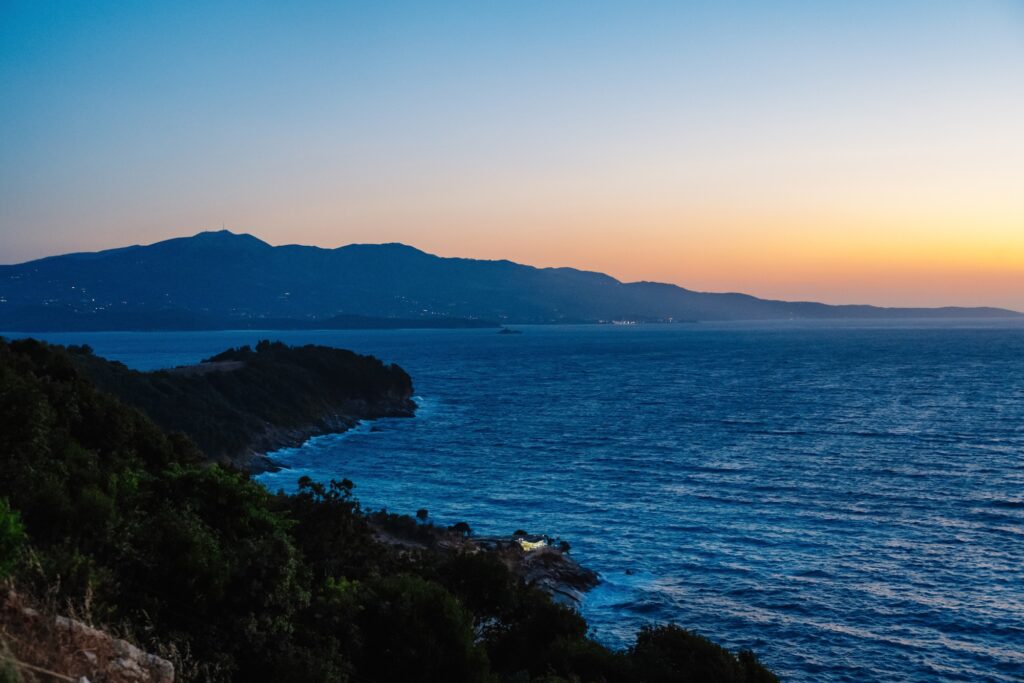
Sunset with Corfu in background

Lekursi Castle, the iconic viewpoint

For the most dramatic sunset in the area, head up to Lekursi Castle, a hilltop ruin above nearby Saranda, about a 30-minute drive from Ksamil. From its elevated position you get sweeping panoramas over Saranda, the bay, the islands, and out toward Corfu, with the sun setting over the water below you. It is the most famous sunset spot in the region for good reason.

Entry to the castle grounds is free, and there is a restaurant with a large outdoor terrace if you want to settle in for drinks or dinner as the light changes. It gets busy in summer, so arrive at least an hour before sunset to claim a good spot. Even if you do not plan to eat, you can simply find a place on the hill, bring a few snacks and drinks, and enjoy the view. Bring a light layer too, since the hilltop breeze cools down after dark.

On the water: a sunset sail

To experience the sunset from a completely different angle, take to the sea. Short sunset sailing and boat trips run out to the Ksamil islands in the evening, letting you watch the sky change from the middle of the water with the coastline glowing behind you. Some include drinks and a swim stop. It is a memorable, slightly special-occasion way to end a day, and a lovely option for couples or a celebration.

Make it a sunset dinner

The classic Ksamil evening is a long seafood dinner timed for sunset. With the town facing west, a waterfront or elevated terrace gives you the meal and the view at once: fresh fish or local mussels, a glass of Albanian white wine, and the sky shifting through gold and pink over the Ionian.

A couple of tips help here. The best sunset tables fill up fast in summer, so arrive early or book ahead. And remember the local rule of thumb that restaurants set a row or two back from the absolute waterfront often have better value, and sometimes, being slightly elevated, an even better unobstructed view than the low beachfront spots. Whether you want it romantic for two or relaxed with the whole family, a sunset dinner is one of the simplest and most reliable highlights of a Ksamil trip.

Watching the sunset from your own terrace

There is one more option that many visitors overlook: skipping the crowds entirely and watching the sunset from where you are staying. If your accommodation faces west, golden hour comes to you, no booking, no walk, no fighting for a table. For families with young kids already settled for the evening, or anyone who just wants a quiet, private moment at the end of the day, this can be the best seat in town.

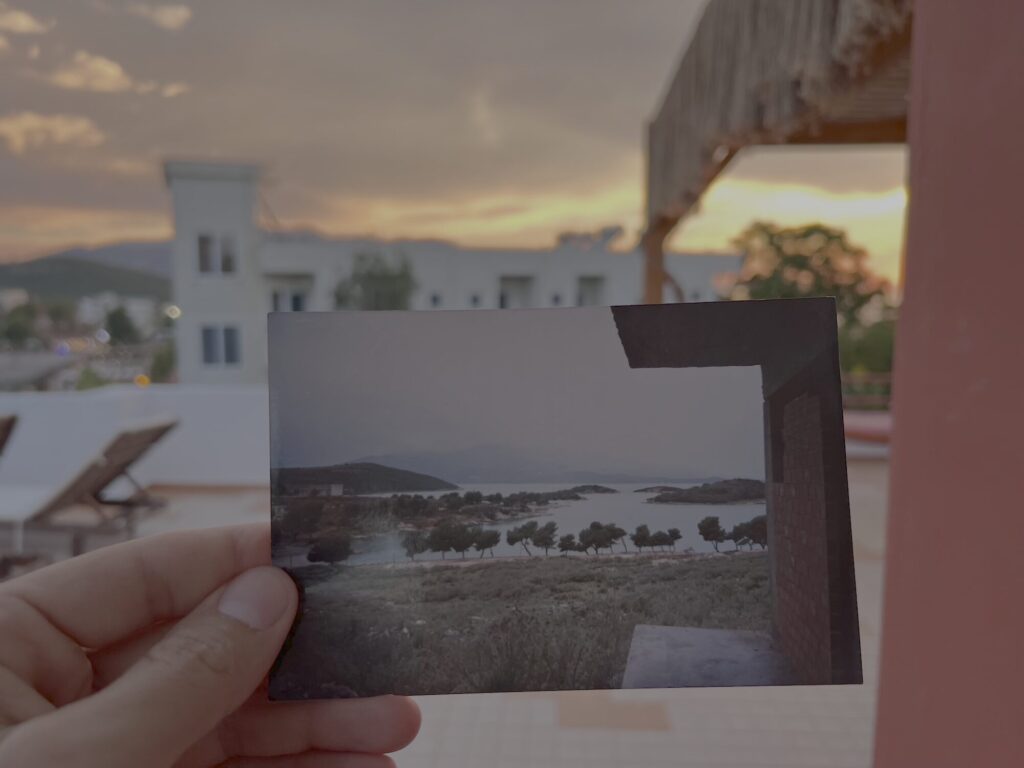
Sunset from our terrace in Villa Papa

This is one of the quiet advantages of Villa Papa. The backyard terrace and shaded lanai face west over the sea, looking toward the sunset, so you can watch the sky change with a drink in hand and dinner from your own kitchen or the BBQ, no reservation required. With a full table on the lanai, it is made for relaxed family dinners as the light fades, and the private setting means you get the view without the crowds. You are still only a five-minute walk from the beach if you would rather wander down for sunset by the water, but on the evenings you would rather stay in, the sunset is already part of the package.

Frequently asked questions

Where is the best place to watch the sunset in Ksamil?

Because Ksamil faces west, most beaches and seaside terraces have great sunset views over the sea and islands. For the most dramatic vantage point, Lekursi Castle above nearby Saranda offers sweeping panoramas; for a different angle, take a sunset boat trip out to the islands.

Does Ksamil have good sunsets?

Yes. The town sits on a west-facing coast, so the sun sets straight over the Ionian Sea, with the offshore islands in silhouette and Corfu often visible on the horizon. It is one of the area’s signature experiences.

Is Lekursi Castle worth visiting for sunset?

Yes. The hilltop ruin above Saranda, about 30 minutes from Ksamil, gives panoramic views over the bay, the islands, and toward Corfu. Entry to the grounds is free, there is a restaurant on site, and you should arrive about an hour before sunset in summer to get a good spot.

What time is sunset in Ksamil?

It varies by season, coming late in summer (well into the evening) and earlier in spring and autumn. Whenever you visit, aim to be in position 30 to 60 minutes before the sun reaches the horizon to enjoy the full golden hour.

Can you have a sunset dinner in Ksamil?

Absolutely. A long seafood dinner timed for sunset is the classic Ksamil evening. Choose a west-facing waterfront or elevated terrace, order fresh fish or mussels with local wine, and book ahead or arrive early in summer for the best tables.

Are there sunset boat tours in Ksamil?

Yes. Short evening sailing and boat trips run out to the Ksamil islands, letting you watch the sunset from the water, sometimes with drinks and a swim stop included. They make a memorable option for couples or a special occasion.


However you do it, do not let a Ksamil evening pass without stopping to watch the sun go down. Whether it is from a beach bar, a hilltop castle, a boat, or your own terrace, that golden moment over the Ionian is one of the things you will remember most.

Want a stay with the sunset built in? Find your dates at Villa Papa.

Staying Active and Grounded in Ksamil: Fitness, Yoga, and Movement by the Sea

A beach holiday and a healthy routine are not opposites. Plenty of people want to keep moving when they travel, whether that means a morning run, holding onto a yoga practice, or just not letting a week of mussels and local wine undo their usual rhythm. Ksamil might be a small village rather than a wellness resort, but it turns out to be a surprisingly good place to stay active, mostly because the best “gym” here is the coast itself.

This guide covers how to stay fit and grounded in Ksamil: the walks and runs, the water-based movement, where to find a workout, and how to build a simple morning routine with a sea view. None of it requires a fancy studio. That is rather the point.

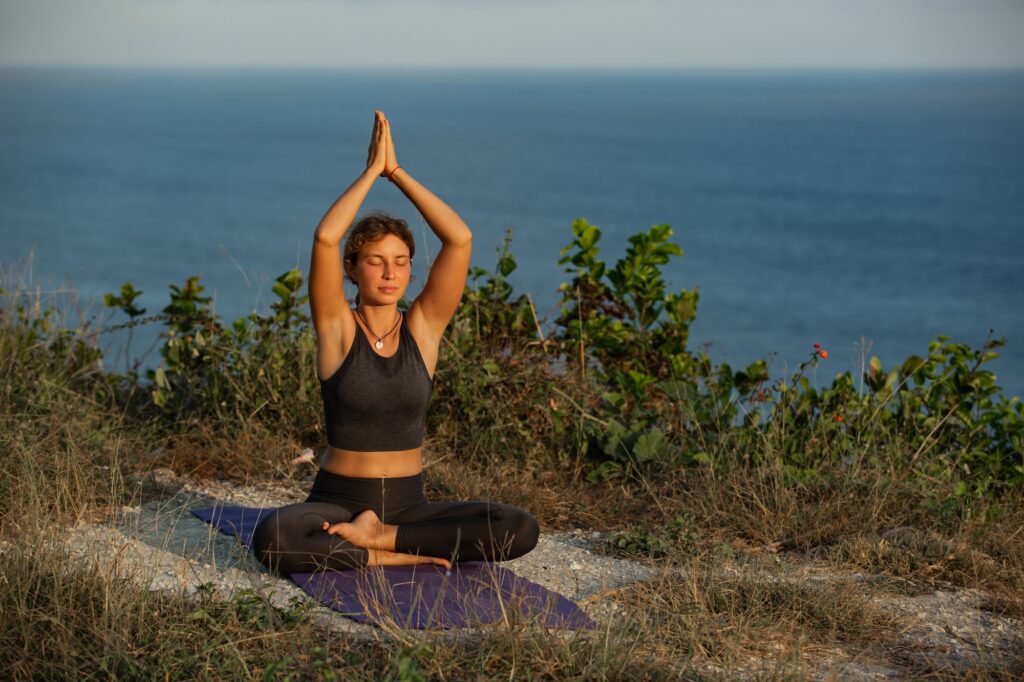
Young woman doing yoga outdoors with amazing back view of the sea

Move with the landscape: walking, running, and hiking

Ksamil’s geography does a lot of the work for you. The village runs along the coast and is small enough to walk end to end in about half an hour, so simply getting around on foot keeps you moving. Early mornings, before the heat and the crowds, are the best time for a walk or run along the quiet shorefront.

For something with more purpose, the coastal trail from Monastery Beach back toward Ksamil is a genuine highlight. It is a walk of roughly a couple of hours at an easy pace, climbing past a hilltop monastery and following the coast through olive groves and past a string of beaches. Take it slowly and detour down toward the sea where the paths branch off. It is exercise that doubles as some of the best scenery in the area.

If you want a flatter, gentler option, the path into the Blue Eye spring is an easy two-kilometer walk through forest, a pleasant low-effort outing if you are making the day trip anyway. And for the genuinely committed, the early-morning quiet of the offseason or shoulder months makes for beautiful, uninterrupted running along the coast.

Get in the water

Swimming is the most natural workout in Ksamil, and the conditions are ideal for it. The water is calm, clear, and shallow a long way out, which makes for safe, steady swimming rather than fighting waves. An early-morning swim before the beaches fill up is one of the simplest ways to start the day moving.

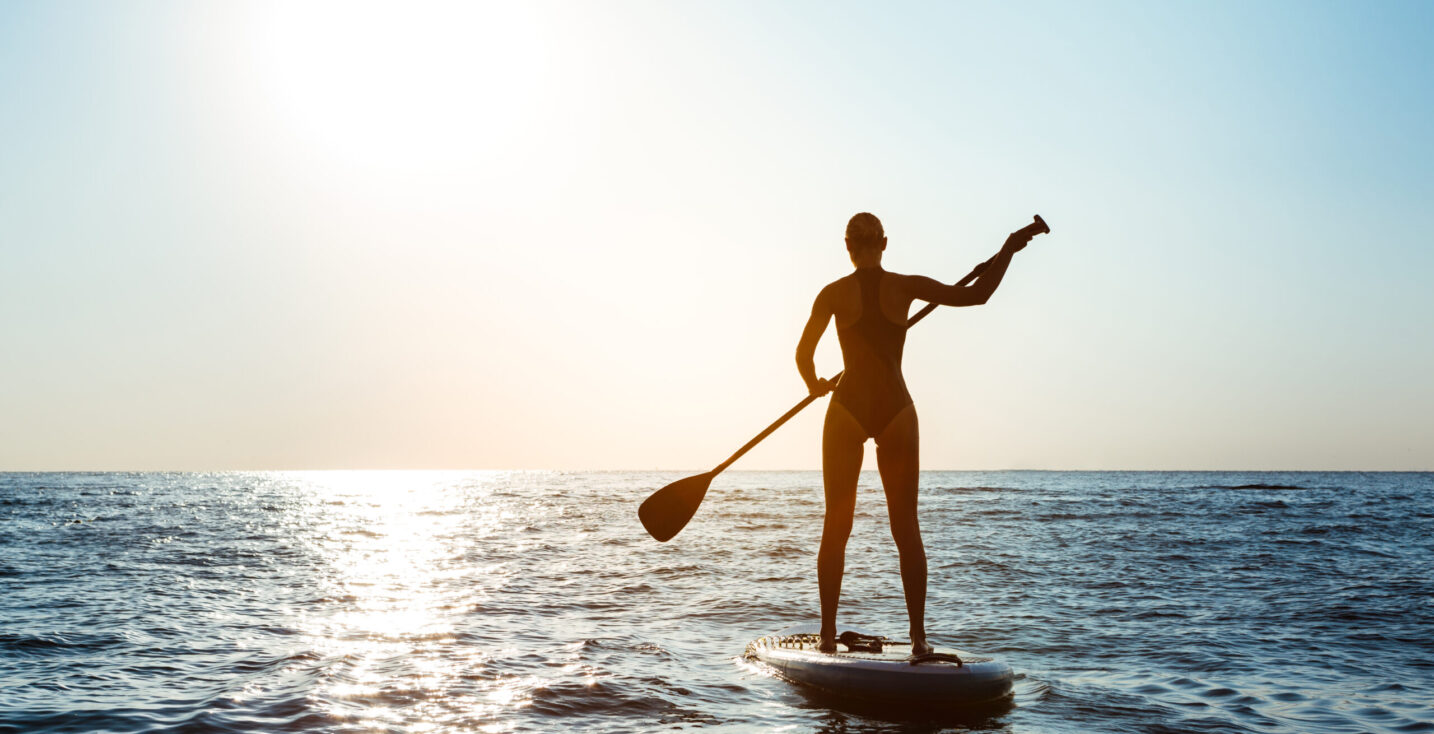
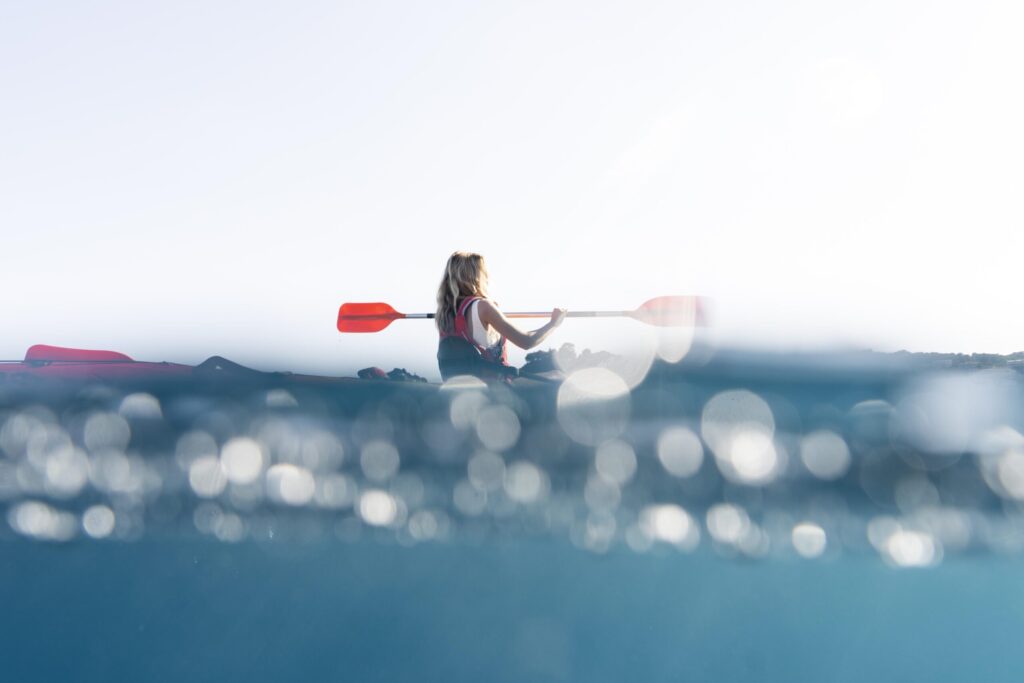
Beyond swimming, the water opens up more active options. Kayaking and stand-up paddleboarding out to the offshore islands are real workouts dressed up as sightseeing, and rentals are easy to find on the main beaches through the season. A morning paddle around the islands works your whole body and earns you a swim stop along the way. Guided sunrise paddleboard sessions are also available if you would rather have someone else handle the logistics.

Silhouette of young beautiful girl surfing in sea at sunrise. Outdoors.

Finding a workout: gyms and classes

Ksamil is a small village, so it does not have a big fitness scene, but you are not without options. There are local gyms in town for a basic weights-and-machines session, and the larger neighboring town of Saranda, about 20 minutes up the coast, has more choice, including gyms with sea views and some yoga, pilates, and wellness or massage options. Because the area is still developing its tourist infrastructure, it is worth checking current opening hours and availability locally rather than assuming, and a short trip into Saranda is easy if you want a fuller facility or a class.

That said, the honest truth is that most people who keep up a routine here do it outdoors and bodyweight-based rather than in a gym. Which brings us to the best approach of all.

Build a simple morning routine with a sea view

You do not need much equipment to stay strong and grounded on a trip like this. A flat patch of ground, a bit of quiet, and a view of the water are enough for a genuinely good morning routine:

Yoga or mobility. A west-facing terrace or a quiet stretch of beach at sunrise is a lovely place to flow through some yoga or mobility work. The calm and the sea air do as much for the head as the body, and it is the kind of grounding ritual that makes a trip feel restorative rather than indulgent.

Calisthenics. Bodyweight training, push-ups, squats, lunges, planks, dips off a low wall or bench, needs no gym at all. A small open space is plenty for a full-body session, and a few simple weight items go a long way if you have access to them.

A swim or paddle to finish. Cap the routine with a swim in the calm morning water or a short paddle. It is the kind of start to the day that is genuinely hard to replicate at home.

The key is consistency over intensity. Twenty focused minutes outdoors each morning, followed by a swim, will keep you feeling strong and clear-headed through a week of beach days and long dinners.

A base that makes it easy

Staying active on holiday is far easier when your accommodation gives you the space and freedom to do it. A cramped hotel room with no private outdoor area makes a morning routine awkward; an open, self-contained space makes it effortless.

This is where Villa Papa works well for the health-minded traveler. The spacious backyard and shaded lanai give you room to lay out a mat for yoga or run through a calisthenics circuit in private, and the west-facing terrace looks out over the sea toward the sunset, an ideal spot for a grounding morning or evening session. There is a private pool for swims and recovery on your own schedule, without competing for space at a public beach, and the villa is a five-minute walk from Ksamil Beach for open-water swims and coastal runs. With two kitchens, it is also easy to keep eating well and cook your own balanced meals rather than relying entirely on restaurants. For anyone who wants to hold onto a healthy routine while still enjoying the Riviera, having that kind of space and flexibility makes all the difference.

Frequently asked questions

Is there a gym in Ksamil?

Ksamil is a small village, but there are local gyms in town for a basic workout. The nearby town of Saranda, about 20 minutes away, has more options, including gyms with sea views and some yoga, pilates, and wellness services. Check current hours locally, as availability can vary by season.

Where can I do yoga in Ksamil?

The most appealing option is outdoors: a quiet beach at sunrise or a private terrace with a sea view makes a beautiful yoga or mobility space. Saranda also has some yoga and pilates options if you prefer a class setting.

Can you run or walk for exercise in Ksamil?

Yes. The village is walkable end to end in about 30 minutes, and the quiet shorefront is great for early-morning walks and runs. The coastal trail from Monastery Beach back to Ksamil is a scenic walk of a couple of hours, and the Blue Eye trail is a flatter, easy two-kilometer path.

What water-based exercise can I do in Ksamil?

Swimming is excellent thanks to the calm, shallow, clear water. Kayaking and stand-up paddleboarding out to the offshore islands are great full-body workouts, with rentals available on the main beaches and guided sunrise sessions on offer.

Do I need a gym to stay fit in Ksamil?

Not at all. Most people who keep a routine here do it outdoors: bodyweight calisthenics, yoga, swimming, paddling, and coastal walks. A bit of open space and a view of the sea is all you really need.

When is the best time of day to exercise in Ksamil?

Early morning, before the heat and the crowds. The shorefront is quiet, the water is calm for swimming, and the light is beautiful for a sunrise yoga or mobility session, especially in the warmer summer months.


You do not have to choose between a holiday and your wellbeing in Ksamil. Move with the coast, swim in the mornings, find a quiet patch of ground for a routine, and you will leave feeling better than when you arrived, which is the best kind of trip there is.

Want space to keep your routine with a sea view? Find your dates at Villa Papa.

Ksamil in the Offseason: A Quieter Side of the Albanian Riviera

Almost everything written about Ksamil is about summer: the packed beaches, the buzzing beach clubs, the wall-to-wall sunbeds. But there is another version of this town that very few visitors ever see. From autumn into spring, the crowds vanish, the music stops, and Ksamil returns to what it really is underneath the holiday rush: a quiet fishing village on a beautiful stretch of coast.

The offseason is not for everyone, and this guide is honest about that. But for slow travelers, writers, remote workers, and anyone craving a peaceful coastal base rather than a party, it can be a genuinely special time to be here. Here is what Ksamil is actually like when the season ends, and how to make a longer, slower stay work.

Albania, ksamil -14 July 2018. Tourists are resting on the beach of the Ionian Sea.

The honest truth about offseason Ksamil

Let’s be straight about this first, because pretending otherwise would not help you plan. From roughly November through March, Ksamil largely shuts down. The majority of beachfront bars, clubs, and restaurants board up for the winter, many hotels close, the boat tours to the islands stop running, and public transport thins out. The town empties as seasonal workers head home, and it becomes a working village again rather than a resort.

The weather cools too. Winters here are mild rather than harsh, with daytime temperatures generally around 10 to 15 degrees Celsius, but it is also the wettest part of the year, and the sea is too cold for most people to swim. So if your dream is sunbathing and beach bars, the deep offseason is not your window.

What you get in return is solitude. The famous beaches sit empty, often with just a handful of people on them. Butrint, the UNESCO-listed ancient city nearby, stays open and is frequently almost deserted, which is a remarkable way to experience two thousand years of history with no crowds. The pace slows right down, prices drop, and the place takes on a calm, local character that the summer version completely hides.

Who the offseason actually suits

This season rewards a particular kind of traveler. If you recognize yourself below, Ksamil in the quiet months might be exactly what you are looking for:

Slow travelers and remote workers. If you can work from anywhere and want an affordable, peaceful coastal base for a few weeks, the offseason delivers cheap rents, empty beaches for walks, and few distractions. It is the kind of setting where you can actually settle in, establish a routine, and get things done, with the sea right there when you need a break.

Writers, creatives, and anyone needing quiet. The stillness that makes the offseason “dead” for partygoers makes it ideal for focus. A long stay with sea views, room to think, and almost no noise is hard to find in summer at any price.

History and nature lovers. With Butrint deserted and the landscape green from winter rains, this is a wonderful time to explore the area’s culture and scenery without fighting crowds or heat.

Shoulder-season visitors who want the best of both. If full winter sounds too quiet, aim for the edges, October or April. You catch warmer days, some businesses still open, far fewer people, and the lowest prices of the comfortable months. October in particular can still offer warm-enough water and a town that has not fully closed.

Remains of the ancient Baptistery from the 6th century at Butrint, Albania. This Archeological site is World Heritage Site by UNESCO.

Making a longer offseason stay work

A quiet, longer stay needs a bit more planning than a summer week. A few things to keep in mind:

Choose your base carefully. With many hotels and restaurants closed, a self-contained place with its own kitchen matters far more than in summer. You want somewhere you can cook, relax, and feel at home, not a resort that depends on amenities that are shuttered for the season.

Plan to self-cater, at least partly. The village supermarkets generally stay open year-round for daily essentials, and Saranda, about 20 minutes up the coast, is a larger town with more shops, services, and restaurants that stay open through winter. Many offseason visitors split their time, basing in quiet Ksamil and popping into Saranda for variety.

Sort out connectivity early. For remote work, reliable internet matters. Mobile coverage is generally good in the village and along the main beaches, and a local SIM with a data package is inexpensive and the most economical option for a longer stay. It is worth confirming the internet situation with your accommodation before committing to a work stay.

Have a car or a plan for getting around. With reduced public transport, a rental car gives you freedom to explore the wider region, the Blue Eye, Gjirokastër, the coast, and to reach Saranda easily. The offseason is actually a lovely time for the scenic coastal drives, without the summer traffic.

Keep expectations realistic about the islands and water. Boat tours largely stop in winter, so reaching the offshore islands means arranging a boat in advance, and swimming is a cold-water proposition. Come for the walks, the views, and the calm rather than the swimming.

A base built for settling in

The offseason is precisely when the kind of accommodation you choose makes or breaks the trip. When the resort infrastructure is closed, you want a self-contained home rather than a hotel room: your own kitchen, your own space, somewhere comfortable to spend real time.

Villa Papa is well suited to a longer, slower stay. With four bedrooms and four bathrooms split across an upstairs unit and a self-contained downstairs master, there is room to spread out, whether you are a couple wanting space, a family settling in, or a small group sharing. Two fully equipped kitchens and two washing machines make self-catering and longer stays genuinely practical, which matters when restaurants are closed for the season. There is a private pool and a spacious backyard with a shaded lanai, plus a west-facing terrace that looks out over the sea toward the sunset, the kind of view that makes a quiet evening in feel like the point rather than a compromise. On-site parking behind a security gate makes having a car easy for those offseason drives and Saranda runs. And it is a five-minute walk from Ksamil Beach, so even in the quiet months, an empty stretch of sand for a morning walk is right on your doorstep.

For anyone drawn to the idea of a peaceful coastal base, somewhere to work, write, or simply slow down for a while, booking directly for an offseason stay is one of the best-value ways to experience a side of Ksamil almost no one sees.

Frequently asked questions

Is Ksamil worth visiting in the offseason?

It depends on what you want. For sunbathing, beach clubs, and swimming, no, most of that shuts down from roughly November to March and the sea is cold. For peace, empty beaches, deserted historical sites like Butrint, low prices, and a quiet coastal base for a longer stay, it can be genuinely special.

What is open in Ksamil in winter?

Far less than in summer. Most beachfront bars, clubs, and many restaurants and hotels close from around November to March, and boat tours stop. Village supermarkets generally stay open, Butrint remains accessible, and nearby Saranda keeps more shops and restaurants running year-round.

What is the weather like in Ksamil in winter?

Mild but wet. Daytime temperatures are usually around 10 to 15 degrees Celsius, with winter being the rainiest part of the year. It is not beach weather, but it is comfortable for walks, sightseeing, and exploring.

Can you work remotely from Ksamil?

Yes, for the right person. The offseason offers a quiet, affordable base, and mobile coverage is generally good with cheap local SIM data plans. Confirm the internet with your accommodation first, and consider a self-catering place since many restaurants close in winter.

When is the best offseason time to visit Ksamil?

The shoulder edges, October and April, offer the best balance: fewer crowds and low prices, but warmer weather and more businesses open than in deep winter. October can still have warm-enough days and a town that hasn’t fully closed.

Do I need a car in Ksamil in the offseason?

It helps a lot. Public transport thins out in winter, so a rental car gives you freedom to reach Saranda, the Blue Eye, Gjirokastër, and the scenic coast, which is especially pleasant without summer traffic.


Ksamil in the offseason is a trade: you give up the beach-club buzz and the warm sea, and you get solitude, space, and a rare look at the real rhythm of this coast. For the right traveler, that is not a downgrade at all. It is the whole appeal.

Looking for a peaceful base to settle in for a while? Find your dates at Villa Papa.

Ksamil on a Budget: How to Visit Without Overspending

Ksamil built its reputation as a budget-friendly slice of the Mediterranean, the “Maldives of Europe” at a fraction of the price. That is still largely true, but with one important caveat: the secret is out. In July and August, prices in Ksamil have caught up with parts of Greece and Croatia, and a “cheap beach holiday” can quietly turn into an expensive one if you do not plan. The good news is that with a few smart choices, especially around when you go and how you handle the small daily costs, Ksamil remains excellent value.

This guide breaks down what things actually cost in Ksamil and the concrete ways to keep your spending down without cutting the fun.

Beautiful Ionian Sea morning summer coast view from beach (Ksamil, Albania).

What Ksamil actually costs

A few honest benchmarks to set expectations. Outside the peak summer weeks, Ksamil is genuinely affordable, and even in high season it is still cheaper than comparable Mediterranean beaches. The single biggest variable is the season.

Daily budget. In the shoulder months, a comfortable mid-range trip can run in the region of 40 to 70 euros per person per day. In peak July and August, that climbs significantly, with some estimates putting Ksamil at 90 to 120 euros per day once accommodation, sunbeds, food, and transfers add up. Budget travelers can go lower; comfort seekers higher.

Sunbeds. This is the cost that surprises people. Nearly all of Ksamil’s beaches are organized into private sunbed areas, so spending the day usually means renting. Expect roughly 10 to 25 euros for two sunbeds and an umbrella, climbing to 30 euros or more at prime central spots facing the islands, and as much as 70 euros for a front-row “Instagram” position at the fanciest beach clubs in peak season.

Food. Eating out is one of Ksamil’s best-value pleasures. A meal at a local restaurant typically runs around 6 to 17 euros per person, with seafood at the higher end and casual grills and tavernas at the lower. Street food like byrek, the flaky savory pastry, costs barely a euro and makes a cheap breakfast or snack. Coffee is well under two euros, and local beer and wine are inexpensive.

Getting there and around. The Saranda-to-Ksamil local bus is about a euro, though it gets packed in summer. The longer bus from Tirana down to Saranda runs around 10-15 euros. The ferry from Corfu to Saranda is roughly 20 to 30 euros each way depending on season and boat. Within Ksamil you do not need transport at all, since the town is walkable.

Activities. Many of Ksamil’s best experiences are cheap or free. The beaches and islands are the main event, and renting a kayak or pedal boat to reach the islands costs around 25 euros (and is often negotiable). Boat trips range from about 20 to 60 euros depending on size and length. Butrint National Park, the standout cultural site, costs around 10 euros for entry.

When to go to save the most

If you take one thing from this guide, make it this: timing is the biggest lever on your budget. Visiting in the shoulder months rather than peak summer can roughly halve your accommodation cost for the same room, the same beach, and the same turquoise water.

Late May, June, and September are the sweet spots. Accommodation can be around half its July-to-August price, the sea is warm, the town is open, and the crowds are lighter. The weather is still very much beach weather. By contrast, July and August bring the warmest sea but the steepest prices and the heaviest crowds, with basic rooms in peak season sometimes hitting prices that would have seemed unthinkable a few years ago.

If your dates are flexible at all, shoulder season is the easiest money you will save on the whole trip.

Practical ways to cut costs

Beyond timing, a handful of small habits add up:

Book accommodation early. Ksamil’s summer prices spike fast and availability tightens, so booking a couple of months ahead for peak season locks in better rates.

Step one row back from the waterfront. For both food and sunbeds, moving a street or two back from the absolute beachfront drops prices noticeably, often without losing much of the view or atmosphere. The family-run lokal a row back from the strip is where meals fall to the single digits.

Use the local buses. The cheap, frequent bus between Saranda and Ksamil costs a fraction of a taxi. For longer hauls, public buses and shared minibuses (furgons) are far cheaper than private transfers.

Share taxis for day trips. Splitting the cost of a taxi to Butrint, the Blue Eye, or back from the Saranda ferry with other travelers brings the per-person price right down. Always agree the fare before you get in.

Eat like a local. Byrek for breakfast, the catch of the day rather than imported options, and the tavernas over the beachfront tourist spots all stretch your food budget. Tap into the markets for fresh fruit and snacks.

Carry cash in lek. Many places are cash-only, and card fees add up, so withdraw Albanian lek from a bank ATM. Euros are often accepted in tourist areas, but you may get change in lek.

Book some activities ahead. Locking in boat trips or tours online can sometimes beat the beachside asking price, though haggling in person works too, especially for kayak and boat hire.

The group and self-catering advantage

Here is one of the biggest budget levers people overlook: how you split accommodation and meals. Hotel rooms charge per room, so a family or group can rack up several bookings fast. A single larger place that the whole group shares, with a kitchen, often works out to a much lower cost per person, especially once you factor in being able to cook some meals instead of eating out every night.

That is exactly where a villa can quietly win on value. Villa Papa sleeps a large group, advertised for up to ten adults (with children able to come in place of adults), across four bedrooms, so splitting the cost between a family or group of friends brings the per-person price down considerably. With two fully equipped kitchens and a BBQ in the backyard, you can cook breakfasts and the odd dinner at home, which adds up to real savings over a week, and grill fresh local fish for a fraction of a restaurant bill. There is a private pool, so beach-club sunbed fees become optional rather than daily, and it is a five-minute walk from Ksamil Beach, so you are not paying for taxis. Booking directly, and ideally in shoulder season, stacks several of these savings together. For groups in particular, it is one of the more cost-effective ways to enjoy Ksamil without feeling like you are budgeting.

Frequently asked questions

Is Ksamil expensive?

It depends entirely on when you go. In peak July and August, Ksamil has caught up with Mediterranean prices and can run 90 to 120 euros per person per day. In shoulder season (late May, June, September), it is far cheaper, often around half the accommodation cost, and remains excellent value compared to Greece or Croatia.

How much does a day at the beach cost in Ksamil?

Most beaches require renting sunbeds, typically 10 to 25 euros for two beds and an umbrella, more at prime central spots and up to around 70 euros for a front-row beach-club position in peak season. There are very few free public beach areas.

What is the cheapest time to visit Ksamil?

The shoulder months, especially late May, June, and September, offer the lowest prices with the same warm sea and good weather. Accommodation can be roughly half its peak-summer rate. The off-season is cheaper still but most places close.

How much does food cost in Ksamil?

A restaurant meal runs about 6 to 17 euros per person, with seafood at the higher end. Street food like byrek costs around a euro, and coffee, beer, and local wine are all inexpensive. Eating a row back from the beachfront saves noticeably.

How can I save money in Ksamil?

Visit in shoulder season, book accommodation early, use the cheap local buses, share day-trip taxis, eat at family tavernas a street back from the beach, carry cash in lek, and consider a self-catering place you can split with a group to cut per-person costs.

Is it cheaper to cook or eat out in Ksamil?

Eating out is affordable, but cooking some meals yourself, especially for a group, saves money over a longer stay, particularly if you grill fresh local fish or seafood. Having a kitchen also reduces reliance on restaurants for every meal.


Ksamil is still a brilliant value beach destination if you play it smart. Go in shoulder season, handle the daily costs wisely, and split a larger stay with your group, and you can enjoy some of the Mediterranean’s clearest water for a fraction of what the bigger-name resorts charge.

Traveling as a group and watching the budget? Find your dates at Villa Papa.
Where to Eat in Ksamil: Seafood, Local Spots, and Sunset Views

Ksamil is rightly famous for its beaches, but the food deserves nearly as much attention. This is a fishing village at heart, and it shows: mussels farmed just up the coast in the Butrint lagoon, fish landed that morning, and terraces angled straight at the sunset. Eating here is less about chasing a single famous restaurant and more about settling into the rhythm of long seaside meals, fresh seafood, and the kind of warm, family-run hospitality the Albanian Riviera does so well.

This guide covers what to eat in Ksamil, the dishes worth seeking out, where the best atmosphere is, and how to get good value, so you can eat as well as you swim.

What Ksamil is known for: the dishes to order

The food scene blends traditional Albanian cooking with Mediterranean, Italian, and Greek influences, and seafood is the undisputed star. A few things are worth ordering specifically:

Mussels, the local signature. The Butrint lagoon’s blue mussels are the dish most associated with Ksamil. You will find them done several ways, but the standout is stuffed or baked mussels, filled with rice and herbs and dressed with olive oil. They turn up as a starter almost everywhere and are about as fresh as seafood gets.

Whole grilled fish. Sea bream and sea bass grilled over charcoal are a Riviera staple, usually priced by weight and meant to be the centerpiece of the meal. Ask for the catch of the day; menus here genuinely change with what the boats bring in.

Grilled octopus and seafood pasta. Tender grilled octopus shows up on most seafood menus, as do seafood risotto and linguine loaded with mussels, prawns, and clams. These are reliably excellent and a good way to taste a bit of everything.

Traditional Albanian dishes. Beyond the seafood, look for fërgesë (a rich dish of peppers, tomatoes, and cheese), tave kosi (baked lamb with yogurt and rice), moussaka, and byrek, the flaky savory pastry. The family-run tavernas in town do these best.

Local wine. Round it off with a glass of Albanian white wine, which most restaurants pour and which pairs beautifully with the seafood. It is inexpensive and a genuine taste of the region.

Food in Ksamil
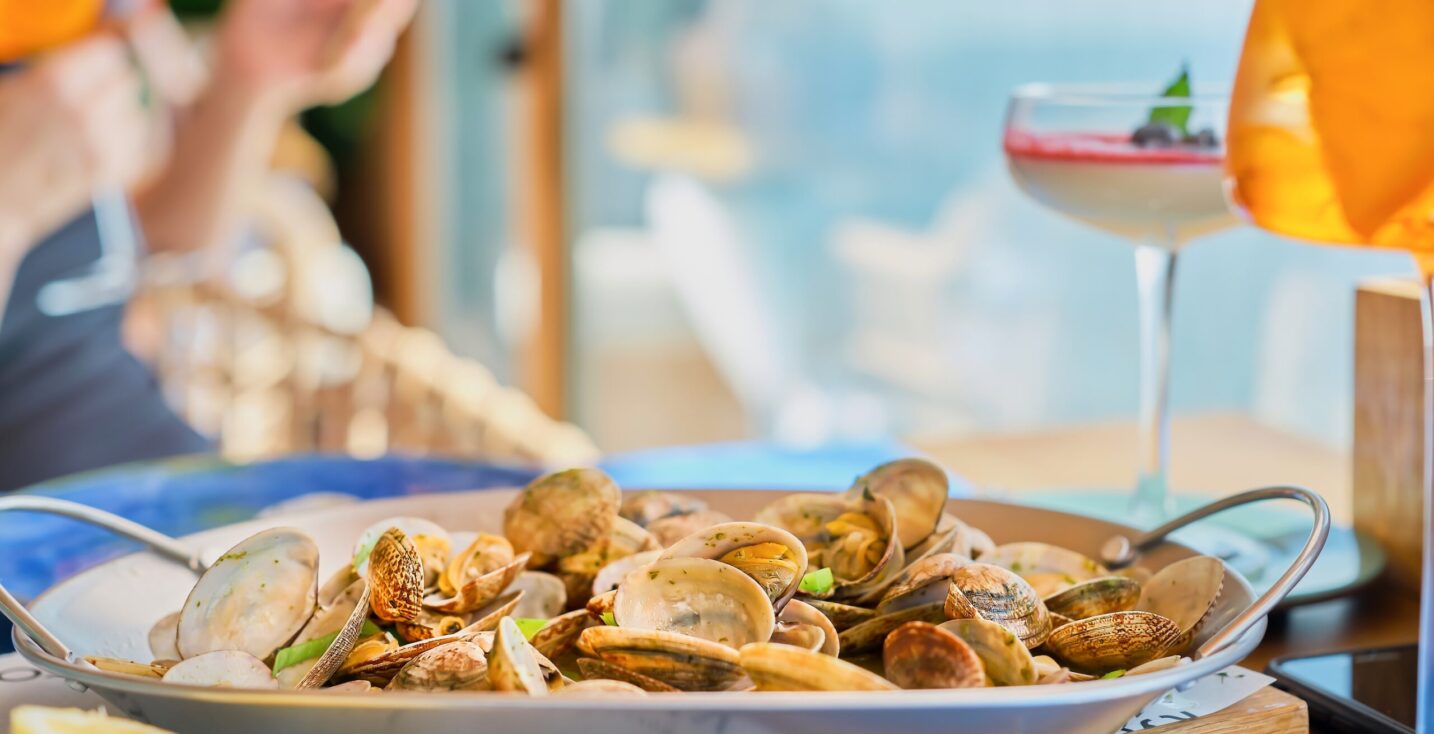
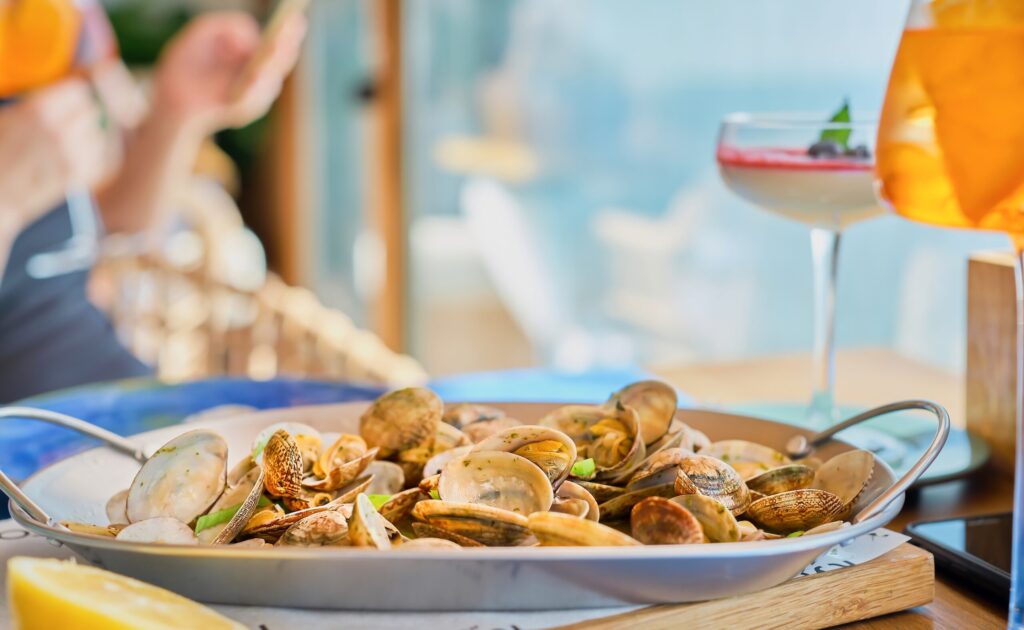
Boiled vongole clams on a table in a Ksamil cafe

Where to eat: by type and setting

Rather than chase a single “best” restaurant, it helps to think about the kind of meal you want.

Waterfront seafood with a view. A row of restaurants sits right along Ksamil Beach and the central coves, serving fresh fish and seafood with the islands and the Ionian in front of you. These are the spots for a special dinner or a long, lazy lunch. They are the priciest tier, but the setting is the whole point, and prices are still very reasonable by Mediterranean standards.

Family-run tavernas. A little back from the water, the family tavernas are where you find the most authentic Albanian cooking: grilled meats, fërgesë, homemade salads, and desserts, often with the owners personally steering you toward their best dishes. These tend to be warmer in feel and gentler on the wallet.

Casual grills and street food. For a quick, cheap, and genuinely good meal, Ksamil has plenty of grills doing souvlaki, gyros, burgers, and wood-fired pizza. Perfect for a relaxed lunch between beach sessions or a low-key dinner with kids.

A useful tip that holds across the whole town: the restaurants set one row back from the absolute waterfront usually offer noticeably better value than the front row, without giving up much of the view or atmosphere. Some of the loveliest sunset terraces are actually slightly elevated and set back, which gives them unobstructed views the low beachfront spots miss, plus a bit of distance from the beach-club noise.

Chasing the sunset

If there is one thing to plan your evening around in Ksamil, it is the sunset. The town faces west across the water, so the golden hour over the Ionian, with the little islands and the silhouette of Corfu in the distance, is genuinely special. Terraces fill up as the light turns, so for the best sunset tables it is worth arriving early or booking ahead in summer.

You do not need a fancy restaurant to enjoy it, either. A drink at a beach bar as the sun drops works just as well, and many of the seaside spots blur the line between bar and restaurant, so you can linger from sunset drinks straight into dinner.

Practical tips for eating in Ksamil

A few things worth knowing:

Prices are reasonable, typically around 15 to 20 euros per person at a mid-range seafood restaurant, less at casual grills and tavernas. Whole fish priced by weight can push a bill higher, so check the price before ordering. Carry cash in Albanian lek, since not every place takes cards, though euros are often accepted in this tourist area. Tipping is not required in Albania, but rounding up or leaving a little for good service is appreciated. Book ahead for the popular sunset and seafood spots in peak season, and arrive early if you want a front-row table for the view. Many restaurants are family-friendly, with outdoor seating and relaxed service that suits children.

Cooking in: the other option

One of the quiet pleasures of Ksamil is that you do not have to eat out every night. With seafood this fresh and supermarkets well stocked, cooking a meal or two yourself can be part of the fun, especially if you have picked up your own mussels on a lagoon tour or grabbed fish from a local vendor.

This is where the right accommodation helps. A place with a proper kitchen and outdoor space lets you mix nights out with relaxed evenings in, which is easier on the budget and lovely with a group. Villa Papa is set up for exactly this, with two fully equipped kitchens and a BBQ pit out in the spacious backyard, plus a shaded lanai with a full table for family meals. You can grill fresh fish at home one night and head out for a sunset dinner the next, all five minutes’ walk from the main beach and the row of seaside restaurants. For families and groups, that flexibility is part of what makes a longer stay so easy.

Frequently asked questions

What food is Ksamil known for?

Seafood, above all. The local signature is mussels from the Butrint lagoon, often served stuffed or baked. Whole grilled fish, grilled octopus, and seafood pasta are also staples, alongside traditional Albanian dishes like fërgesë, tave kosi, and byrek.

How expensive is eating out in Ksamil?

Reasonable by Mediterranean standards, usually around 15 to 20 euros per person at a mid-range seafood restaurant, and less at casual grills and family tavernas. Whole fish is priced by weight, so check before ordering.

Where are the best sunset dinner spots in Ksamil?

The west-facing seaside terraces along and just above the beach offer the best sunset views over the islands and Corfu. Spots set slightly back and elevated often have the most unobstructed views. Arrive early or book ahead in summer.

Do Ksamil restaurants take cards or only cash?

It varies. Many places accept cards and euros, but plenty are cash-only, so carry Albanian lek to be safe, especially at smaller tavernas and grills.

Is the seafood in Ksamil fresh?

Yes. Most restaurants source their fish and seafood from local fishermen daily, and the mussels come from farms in the nearby Butrint lagoon. Ask for the catch of the day for the freshest option.

Are Ksamil restaurants good for families?

Many are, with casual outdoor seating, relaxed service, and menus that suit children, including grills serving pizza, burgers, and gyros alongside the seafood.


Come hungry, order the mussels, share a whole grilled fish, and time at least one dinner for sunset. In Ksamil, the food is every bit as much a part of the holiday as the beaches.

Want a base with two kitchens and a BBQ for nights in? Find your dates at Villa Papa.
Things to Do in Ksamil Beyond the Beach

The beaches are why most people come to Ksamil, and they are reason enough. But spend more than a day here and you will find there is plenty to do once you peel yourself off the sunbed. You can paddle out to uninhabited islands, harvest your own mussels on a lagoon, dive on sunken warships, hike to a hilltop monastery, or wander an ancient ruined city, all within easy reach of the sand.

This guide covers the best things to do in Ksamil beyond lying on the beach, from on-the-water adventures to history, food, and sunsets. Most of it can be slotted around lazy beach mornings, which is exactly how a good Ksamil trip should feel.

Get out on the water

Island-hopping by kayak, paddleboard, or boat

The little islands just offshore are Ksamil’s signature feature, and getting out to them is the single best non-beach activity here. By mid-morning the main beaches are lined with kayaks and pedal boats to rent, usually by the hour, and the two closest islands are an easy paddle of just a few minutes. Strong swimmers can even reach the nearest one in calm water.

If you would rather not navigate yourself, guided stand-up paddleboard tours run at sunrise and sunset and are a lovely, serene way to see the coast in soft light. Small boat taxis also shuttle people out to the further islands for a few euros, dropping you on a quiet stretch of sand for a proper castaway afternoon. Bring water and shade, since the islands have little of either.

Speedboat and coastal boat tours

For more range, a coastal boat tour opens up stretches you cannot reach from the beach. Half-day trips cruise the coastline around Ksamil and stop at spots like Pigeon Cave, hidden bays, and Tongo Island, with several breaks for swimming and snorkeling in clear water. Many also pass the ruins of Ali Pasha’s Castle near the Butrint lagoon. These tours range from quick 25-minute island spins to relaxed four-hour cruises, so there is something for every pace.

The mussel sailing tour

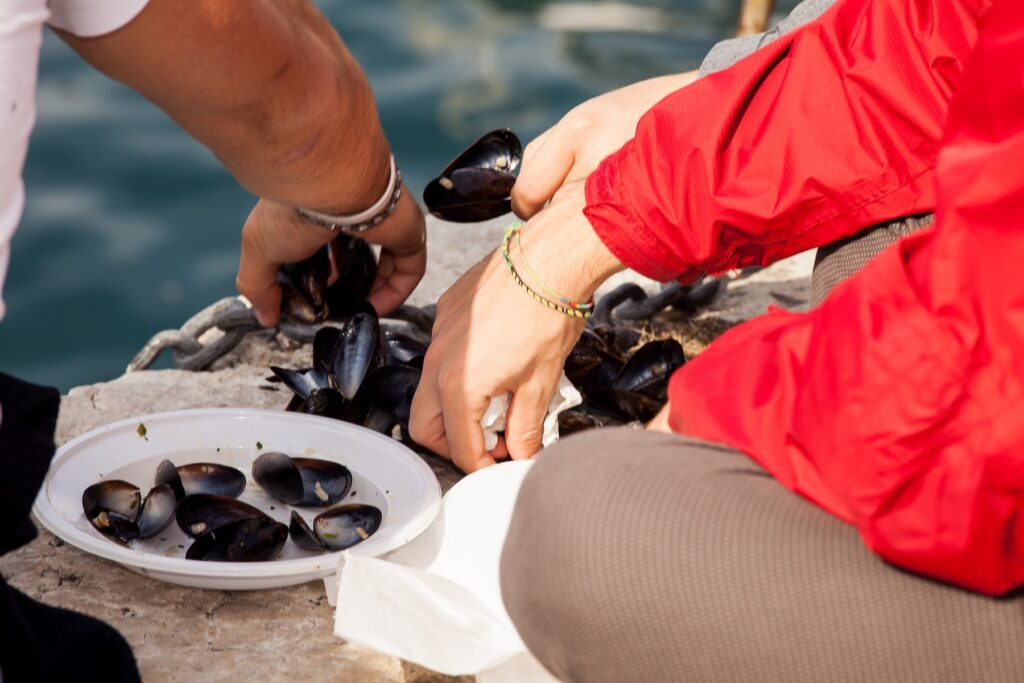
This is one of the most distinctive experiences in the area and a real local highlight. The Butrint lagoon is dotted with mussel farms, and small-group sailing tours take you out to learn how the famous blue mussels are cultivated, harvest some yourself, and then sit down at a simple family restaurant to eat them several ways, often dressed simply with olive oil, lemon, and parsley and paired with local white wine. It combines being on the water, learning something, and eating extremely fresh seafood, usually finishing with a sunset sail back. Reviewers consistently rate it as a trip highlight.

Snorkeling and wreck diving

The clear, calm water makes for easy snorkeling right off the beaches and around the islands, where you will spot fish in the shallows. For something more serious, the area has an unusual draw for divers: a cluster of military ships intentionally sunk to create an underwater park, sitting at depths from around 16 to 30 meters. The water is cooler than the tropics, so a wetsuit helps, but it is an atmospheric dive for anyone certified, and beginners can learn in the shallows nearby.

History and views on land

Butrint National Park

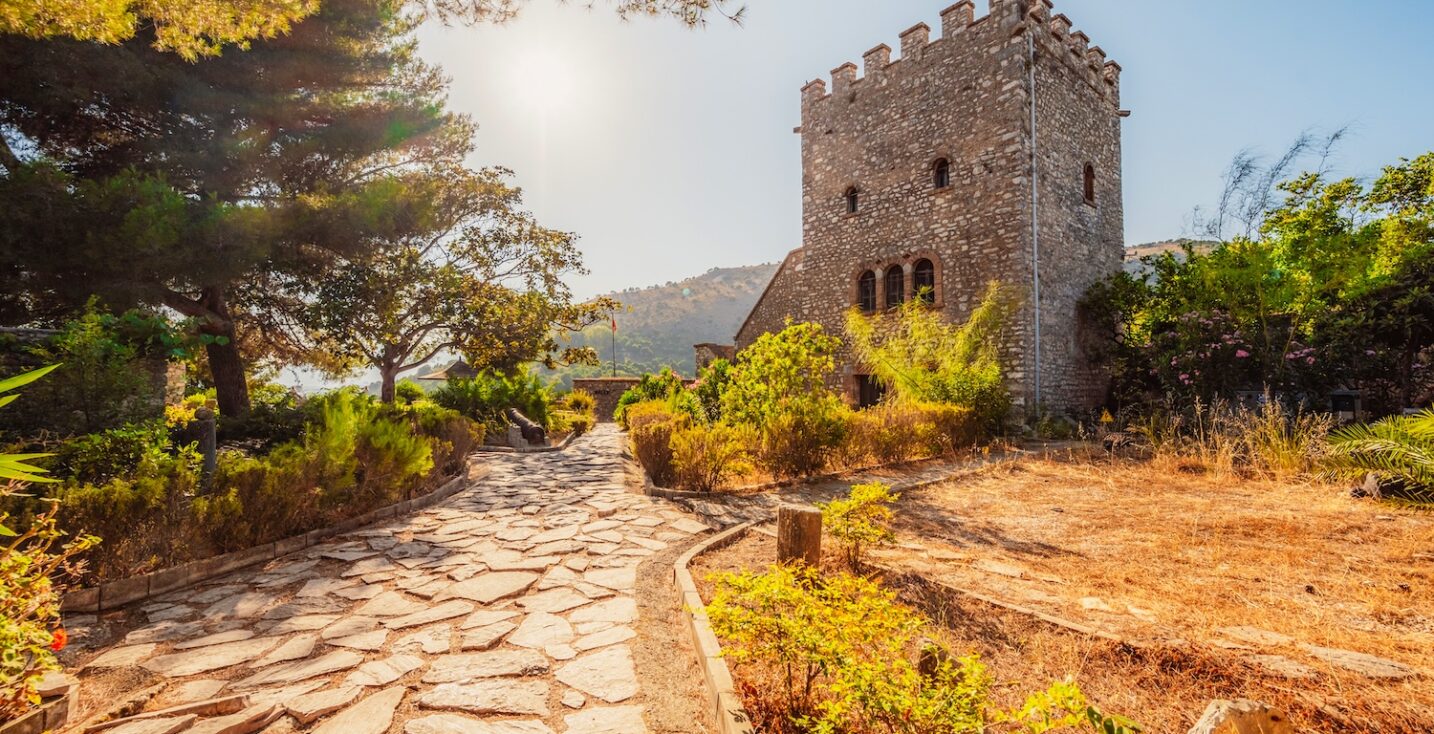
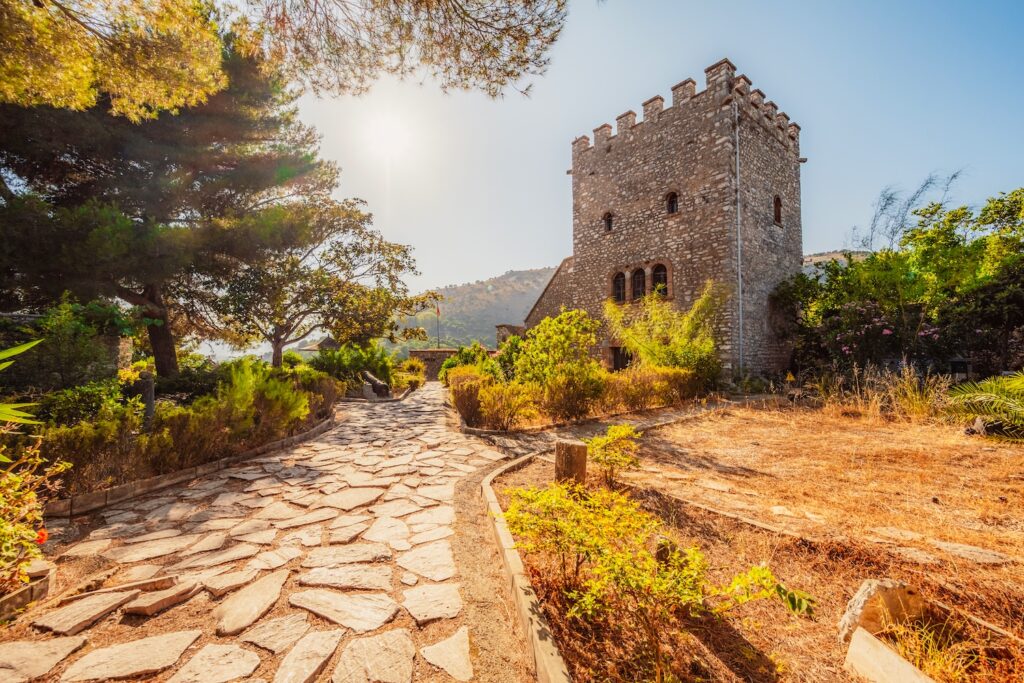
A short drive south of Ksamil, Butrint is a UNESCO World Heritage Site and the standout cultural outing in the area. The ancient Greek and Roman city is spread across a wooded peninsula, with a Greek theatre, Roman baths, an early Christian baptistery, and later Venetian additions to explore. Much of the walk is shaded by trees, a real bonus in summer. Set aside a couple of hours, and go earlier in the day to beat the heat.

The Monastery Beach hike

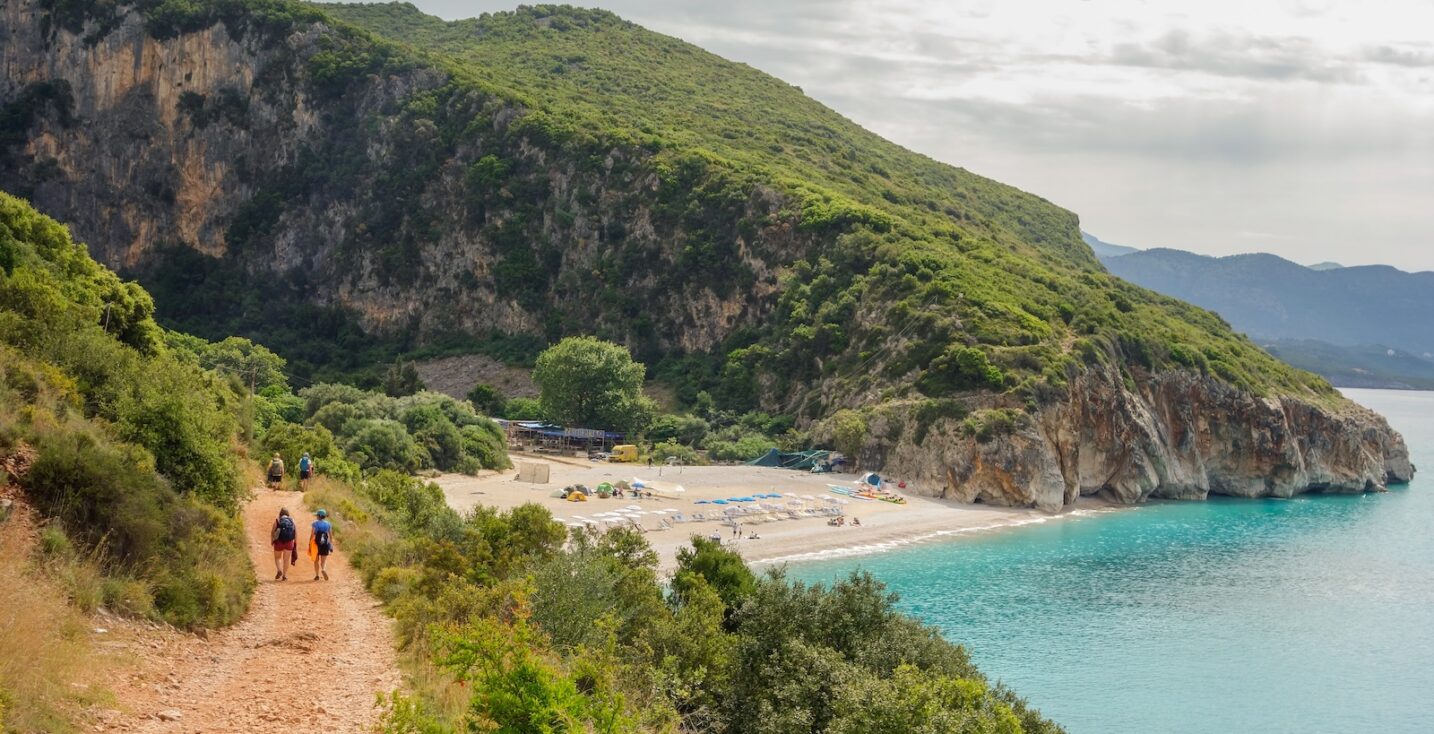
For an easy adventure on foot, there is a walking trail that starts near Monastery Beach, just north of Ksamil, and climbs to a hilltop monastery before following the coast back toward town through an olive orchard. The final stretch is a path that many people walk at sunset. To reach the start, take the Saranda-bound bus and ask to be dropped at Monastery Beach, then head uphill rather than down to the sand.

Lekursi Castle

Up above nearby Saranda sits Lekursi Castle, a hilltop ruin with sweeping views over the bay and across to Corfu. There is a restaurant and bar making the most of the panorama, and it is a popular sunset spot. It is an easy add-on if you are heading into Saranda anyway, and a common final stop on full-day tours of the region.

Food, sunsets, and slow evenings

Ksamil’s evenings are quietly one of its best features. As the day crowds clear out, the light turns golden over the water and the seaside terraces fill up. A long dinner watching the sun drop behind the Ionian, with the islands and the outline of Corfu in the distance, is the kind of simple pleasure the town does perfectly.

Seafood is the thing to order. Beyond the lagoon mussels, look for fresh grilled fish and local dishes at the tavernas in and around town. A useful tip that applies across Ksamil: restaurants set a row or two back from the absolute waterfront often offer better value without giving up much of the view or atmosphere. For a livelier evening, Ksamil’s beach clubs run into the night in summer, and Saranda, a short hop away, has a busier bar and nightlife scene.

Make it easy on yourself

Many of these activities are easier with a comfortable base nearby and, for the inland and coastal trips, a car. Staying within walking distance of the main beach means the kayak rentals, boat-tour docks, and sunset terraces are all close, while on-site parking makes day trips to Butrint, the Blue Eye, or the quieter beaches straightforward.

Villa Papa fits that brief. It sits about a five-minute walk from Ksamil Beach, so the island launch points and evening dining are close by, and it has on-site parking behind a security gate for the days you want to drive out and explore. With four bedrooms, a private pool, and a shaded lanai, it gives families or groups a relaxed home base to come back to after a day on the water, plus a kitchen and BBQ for those slow evenings in when you would rather cook your own fresh catch than head out.

Frequently asked questions

What is there to do in Ksamil besides the beach?

Plenty: island-hopping by kayak, paddleboard, or boat; coastal boat tours to caves and hidden bays; a mussel-harvesting sailing tour on the Butrint lagoon; snorkeling and wreck diving; exploring ancient Butrint; the Monastery Beach hike; and sunset views from Lekursi Castle.

Can you go island-hopping in Ksamil?

Yes. Rent a kayak or pedal boat from the main beaches and paddle to the two closest islands in a few minutes, take a boat taxi to the further ones, or join a guided paddleboard or speedboat tour.

What is the mussel tour in Ksamil?

A small-group sailing tour out to the mussel farms on the Butrint lagoon, where you learn how the local blue mussels are grown, harvest some yourself, and then eat them freshly cooked at a family restaurant, often finishing with a sunset sail. It is one of the area’s most highly rated experiences.

Is there diving or snorkeling in Ksamil?

Yes. Snorkeling is easy off the beaches and around the islands. For diving, there is an underwater park of intentionally sunken military ships at depths of roughly 16 to 30 meters, plus shallow areas suitable for beginners.

What can you do in Ksamil in the evening?

Watch the sunset over the Ionian with the islands and Corfu in view, enjoy a long seafood dinner on a seaside terrace, visit Lekursi Castle near Saranda for panoramic views, or head to the beach clubs and Saranda’s nightlife for something livelier.

Is Butrint worth visiting from Ksamil?

Yes. It is a short drive away, much of the UNESCO-listed site is shaded by trees, and the mix of Greek, Roman, and Venetian remains makes it the standout cultural day out in the area. Allow a couple of hours and go earlier in the day.


Ksamil rewards you twice over: once for the beaches, and again for everything around them. Build in a boat trip, a bit of history, and a sunset dinner or two, and a beach holiday turns into something richer.

Want a relaxed base for an activity-filled stay? Find your dates at Villa Papa.
A Perfect Day Trip from Corfu to Ksamil (and Why You Might Stay Longer)

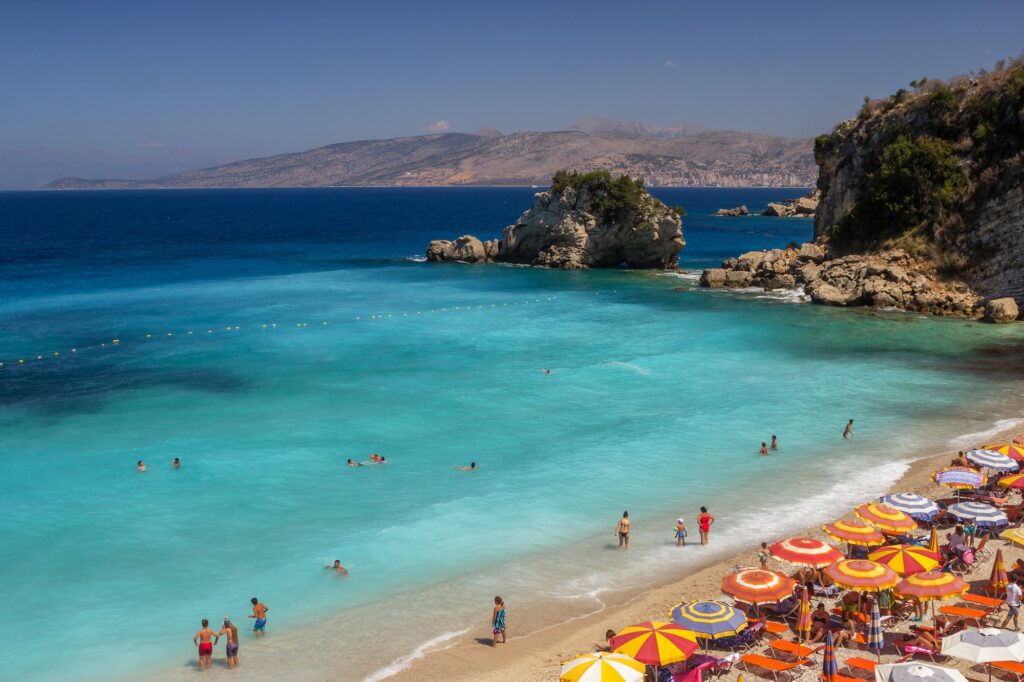
If you are holidaying in Corfu and keep spotting that hazy coastline across the water, that is Albania, and the turquoise beaches of Ksamil sit just behind it. A day trip across is very doable, and it is a fun way to add a second country to your Greek island holiday. You can swim in some of the clearest water in the Mediterranean, see an ancient ruined city, and be back in Corfu for dinner.

The honest catch is that the logistics eat into your day. By the time you have crossed the border, cleared passport control twice, and reached Ksamil, you are often left with only a few hours on the ground. For some travelers that is the moment they realize Ksamil deserves more than a flying visit. This guide walks through how to do the day trip well, and why you might end up extending it.

The logistics, kept simple

There is no direct ferry from Corfu to Ksamil. The ferry runs from Corfu Town to Saranda, the Albanian port just up the coast, and you cover the last stretch to Ksamil by road. The crossing itself is short, as little as 30 minutes on a fast boat, with the slower ferry taking around an hour or more.

From Saranda, Ksamil is about 14 to 15 kilometers south, roughly a 20 to 30 minute taxi ride or a cheap local bus that passes through Ksamil on its way to Butrint. If you share a taxi with other travelers heading the same way, the cost drops considerably.

A few things to get right before you go:

Budget the full journey, not just the ferry. Allow around 2.5 to 3 hours each way once you factor in getting to the port, passport control on both sides, the crossing, and the onward ride to Ksamil. The boat is the quick part.

Bring your passport. Albania is outside the EU, so this is an international border crossing with passport control in both directions. Keep your documents handy and arrive at the port early, ideally about an hour before departure, since summer queues at customs can be long.

Watch the time difference. This trips people up. Corfu (Greece) runs one hour ahead of Ksamil (Albania). You gain an hour heading into Albania and lose it coming back, so double-check which clock your return ferry time is using. Missing the last boat means an unplanned night in Albania.

Book ahead in summer. From June to September the ferries are busy. Reserve your tickets in advance to lock in the departures you want, and consider a round-trip ticket, which often comes with a small discount.

A perfect one-day itinerary

To make the most of a single day, take the earliest ferry you can, often around 8:00 or 8:45 in the morning in high season, and plan to return on a late boat.

Morning: cross and head to the beach. Catch the early ferry from Corfu to Saranda. Once through customs, grab a taxi or the local bus straight to Ksamil and go directly to the water. Aim for one of the calmer beaches, claim a sunbed or lay down a towel, and spend the morning swimming in that famously shallow, clear water before the day heats up and fills up.

Midday: the islands and lunch. Rent a kayak or pedal boat from the beach and paddle out to the little offshore islands, just a few minutes away, or take a short boat taxi. Then settle in for a long Albanian lunch by the sea. Fresh fish and locally farmed mussels are the things to order, and prices are gentle compared to Greece.

Afternoon: a little history or more beach. If you would rather see something beyond the sand, Butrint National Park is a short ride south, a UNESCO-listed ancient city with shaded ruins you can explore in a couple of hours. Otherwise, simply stretch out the beach afternoon a little longer.

Evening: head back. Leave yourself plenty of buffer. Taxi or bus back to Saranda, arrive at the port about an hour before your ferry, and cross back to Corfu, gaining your hour back as you go. You will be in Corfu Town in time for a late dinner.

If you would rather not juggle ferry tickets, border timing, and transfers yourself, organized full-day tours run from Saranda and bundle the crossing, transport, and a few highlights into one booking. The trade-off is a fixed schedule and less freedom to linger.

Aerial view of the coastline of the resort town of Ksamil on a sunny summer day. Albania.

Why you might want to stay longer

Here is the thing most day-trippers discover. After subtracting the travel time on both ends, a day trip leaves you with maybe four or five hours in Ksamil. That is enough for a taste, a swim, a lunch, a quick look at the islands. It is not enough to actually slow down and enjoy the place, and Ksamil is somewhere that rewards slowing down.

There is also more here than fits in an afternoon. The quieter southern and northern beaches take time to seek out. Butrint deserves a proper few hours. The Blue Eye spring is a worthwhile inland trip. Saranda has its own promenade and dinner scene. And the magic hour in Ksamil is the evening, when the day crowds thin, the light goes golden over the water, and the terraces fill up for sunset, which is exactly when day-trippers are rushing back to the ferry.

Turning the day trip into a two or three night stay changes the whole experience. You get unhurried beach mornings, time for the islands and a day trip or two, and those long Albanian Riviera evenings that the rushed version misses entirely. Given how affordable Albania is compared to Corfu, it often makes for a relaxed and good-value extension to a Greek holiday.

If you decide to stay

If a day in Ksamil leaves you wanting more, having a comfortable base makes extending easy, especially if you are traveling as a family or group. A private villa with its own pool and kitchen turns a rushed day trip into a proper little holiday-within-a-holiday, with room to spread out and no daily ferry to catch.

Villa Papa works well for this. It is a four-bedroom, four-bathroom villa about a five-minute walk from Ksamil Beach, with a private pool, a shaded lanai for meals, and on-site parking behind a security gate if you rent a car to explore further. With two kitchens and space for a group, it suits families or friends who arrive for the beach and decide to stay for the sunsets. Booking directly is a straightforward way to secure a few nights once Ksamil wins you over.

Frequently asked questions

Is a day trip from Corfu to Ksamil worth it?

Yes, if you go in with realistic expectations. You can swim, have lunch, and see the islands in a day. But travel time on both ends means only a few hours on the ground, so many visitors find it is worth staying a night or two instead.

How long does it take to get from Corfu to Ksamil?

Budget around 2.5 to 3 hours each way. The ferry to Saranda is short, as little as 30 minutes on a fast boat, but you also need time for getting to the port, passport control on both sides, and the onward ride to Ksamil.

Do I need a passport for a day trip to Ksamil?

Yes. Albania is outside the EU, so this is an international border crossing with passport control in both directions. Arrive at the port early, especially in summer.

What is the time difference between Corfu and Ksamil?

Corfu is one hour ahead of Ksamil. You gain an hour entering Albania and lose it returning to Greece, so check which clock your return ferry time uses to avoid missing the boat.

What can you do in Ksamil in one day?

Swim at the beaches, paddle out to the offshore islands by kayak or boat taxi, enjoy a long seafood lunch, and optionally visit nearby Butrint National Park. Take the earliest ferry and a late return to fit it all in.

Should I do Ksamil as a day trip or stay overnight?

A day trip works for a quick taste. To actually enjoy the quieter beaches, the islands, a day trip or two, and the evening atmosphere, a stay of two or three nights is far more rewarding and, given Albania’s affordability, good value.


A day in Ksamil is a lovely addition to a Corfu holiday. Just do not be surprised if, somewhere around your second swim, you start wishing you had booked a few nights on this side of the water.

Tempted to turn the day trip into a stay? Find your dates at Villa Papa.
Ksamil with Family: A Practical Guide for Traveling with Kids

Ksamil is one of those rare beach destinations that genuinely works for families with young children, and it is not just marketing. The thing that makes it special for kids is the water. While much of Albania’s southern coast is pebbly and drops off quickly, Ksamil’s beaches are sandy and famously shallow. You can wade out a good distance and still be only waist-deep, the seabed is visible on calm mornings, and the offshore islands shelter the bay so the water stays gentle. For toddlers and nervous swimmers, that combination is hard to beat.

That said, traveling here with kids does take a little planning. Crowds, parking, sun, and the realities of a small town all matter more when you have little ones in tow. This guide covers what actually makes Ksamil work for families, the calmest beaches, the easiest day trips, what to pack, and how to set yourself up for a smooth trip.

Waters near Ksamil can be calm

Why Ksamil suits families

The headline reason is the safe, shallow swimming. The Ionian here forms a calm, lagoon-like bay with fine sand underfoot and no rocks or sudden drop-offs at the main family beaches. The nearest island sits a couple hundred meters offshore, close enough that the bay stays sheltered and the water rarely gets rough. Kids can paddle, dig, and build sandcastles for hours while you actually relax.

A few honest caveats worth knowing up front. Much of Ksamil’s sand is imported and topped up each season, and a few otherwise lovely beaches have patches of coarse sand or small pebbles, so water shoes for little feet are a smart pack. There are no official lifeguards, though beach club staff are usually nearby at the organized sections, so kids always need adult eyes on them. And the town gets genuinely packed in July and August, which is its own challenge with children.

The calmest beaches for kids

Not all of Ksamil’s beaches are equal when you have young children. The central main beach is beautiful but also the busiest, and at peak times it turns into a wall of sunbeds with constant boat and pedalo traffic just offshore. For a calmer day, head to the quieter coves.

Lori Beach is a favorite with families for good reason. It is a smaller, more relaxed beach where the sand slopes gently into the water, the shallow areas are perfect for play, and the sunbeds are spaced out rather than crammed together. There is also free parking, which is a real bonus with a carful of kids and gear. Puerto Rico Beach, just across the small bay, is another calm, family-friendly spot with the same soft sand and gentle water. Ksamil Beach 7 sits right by the islands, with powdery sand and shallow, clear water, and it tends to feel a little less frantic than the very central stretch.

If you are willing to drive a short way north toward Saranda, beaches like Pulebardha and Mirror Beach offer softer, shallower entries in a more natural setting, a nice change of pace for a full beach day.

Kids playing together near sea

Family-friendly things to do beyond the beach

Explore the offshore islands. The little islands just off the coast are a gentle adventure kids love. You can rent a pedal boat or kayak from the main beaches and paddle out in just a few minutes, or take a short boat taxi. The calm, clear water around them is great for a supervised splash, and a snorkel mask turns it into a treasure hunt for small fish.

Visit Butrint National Park. Just a short drive south of Ksamil, this UNESCO World Heritage site is a surprisingly good outing with children. The ancient Greek and Roman ruins are spread across a wooded peninsula, so much of the walk is shaded, a genuine relief in summer. Kids can clamber around an old theatre and imagine a city thousands of years old. Plan on a couple of hours, go earlier in the day to beat the heat, and bring water and cash for tickets.

Take it slow. Honestly, one of the best things to do in Ksamil with kids is not much at all. The rhythm of shallow-water mornings, a long lunch, a nap, and a gentle evening stroll suits family travel beautifully, and it is exactly what this town does best.

When to come with children

Timing matters even more with kids. July and August bring the warmest sea but also the heaviest crowds, the highest prices, and serious midday heat, plus parking that fills up early and beaches at capacity by late morning. For families, the shoulder months are usually the smarter call.

Late May, June, and September tend to be the sweet spots: the water is warm enough for happy swimming, the town is open and lively, the crowds are lighter, and prices are gentler. September in particular keeps a warm sea while the crowds thin out after the first week. Whenever you come in peak season, the single most useful habit is to get to the beach early, both to claim a shaded spot and to enjoy the calm water before the day heats up and fills up.

What to pack for Ksamil with kids

A few things make a real difference here. Bring water shoes for little feet, since some beaches have coarse sand or pebbles. Pack serious sun protection: high-factor sunscreen, hats, and a beach umbrella or tent if you have very young children, because the summer sun is strong and shade is not guaranteed. A baby carrier is more useful than a stroller in places with uneven or cobbled ground, especially on day trips to older towns. And carry cash in Albanian lek for sunbeds, beach snacks, parking, and attraction tickets, since cards are not accepted everywhere.

Day-to-day essentials are easy to find. The village supermarkets are well stocked, including familiar international brands, so you will not struggle to find nappies, snacks, or the bits you inevitably forget.

Where to stay with a family

This is where the kind of accommodation you choose really shapes the trip. Hotel rooms can feel cramped with kids, and splitting a family across separate rooms is its own headache. A self-contained place with a kitchen and some outdoor space tends to make family travel far smoother: you can cook meals on your own schedule, do laundry, spread out, and give everyone room to breathe after a busy beach day.

Villa Papa is built for exactly this. It has four bedrooms and four bathrooms, so a larger family or two families traveling together can spread out comfortably, with a layout split across an upstairs unit of three ensuite bedrooms and a downstairs master with its own living room, kitchen, and bathroom. There are two fully equipped kitchens, which makes catering for kids and adults at once much easier, plus two washing machines for the inevitable laundry. A private pool gives children a safe, contained place to swim right at home, and the large backyard has a shaded lanai with a full table for family meals and a BBQ for relaxed evenings in.

For families with the littlest travelers, there is a high chair and a crib on-site, which removes two of the bulkiest things you would otherwise have to haul along or hunt down. The villa is advertised for up to ten adults, and children can come along in place of adults, so it flexes to suit multi-generational trips or a couple of families sharing. It sits about a five-minute walk from Ksamil Beach with on-site parking behind a security gate, so the shallow water is close and the car is safe for those day trips to Butrint or the quieter beaches.

Frequently asked questions

Is Ksamil good for families with young children?

Yes. It is widely considered the best beach destination in Albania for young kids, thanks to its sandy beaches, shallow and calm water, and lack of rocks or drop-offs at the main family beaches. The offshore islands shelter the bay and keep the water gentle.

Which Ksamil beaches are best for kids?

Lori Beach and Puerto Rico Beach are calm, family-friendly favorites with gentle, shallow water and space between sunbeds. Ksamil Beach 7 is also good and sits close to the islands. The central main beach is beautiful but the busiest.

Are there lifeguards on Ksamil beaches?

There are no official lifeguards, though beach club staff are usually present near the water at organized sections. Children should always be supervised in the water.

What should I pack for Ksamil with kids?

Water shoes for coarse-sand or pebbly patches, strong sun protection and shade, a baby carrier for uneven ground, and cash in Albanian lek for sunbeds, snacks, and parking. Village supermarkets are well stocked for anything you forget.

When is the best time to visit Ksamil with a family?

Late May, June, and September offer warm water, lighter crowds, gentler prices, and more manageable heat than the July-to-August peak. Get to the beach early whenever you visit in summer.

Is Butrint a good day trip with children?

Yes. It is a short drive from Ksamil, much of the site is shaded by trees, and kids enjoy exploring the ancient ruins. Go earlier in the day to avoid the midday heat and bring water and cash.


Ksamil rewards families who lean into its easy pace: shallow mornings in the water, shaded ruins, slow lunches, and warm evenings. Plan around the heat and the crowds, base yourself somewhere with room to spread out, and it makes for a genuinely relaxing family holiday.

Traveling with kids or a larger group? Find your dates at Villa Papa.
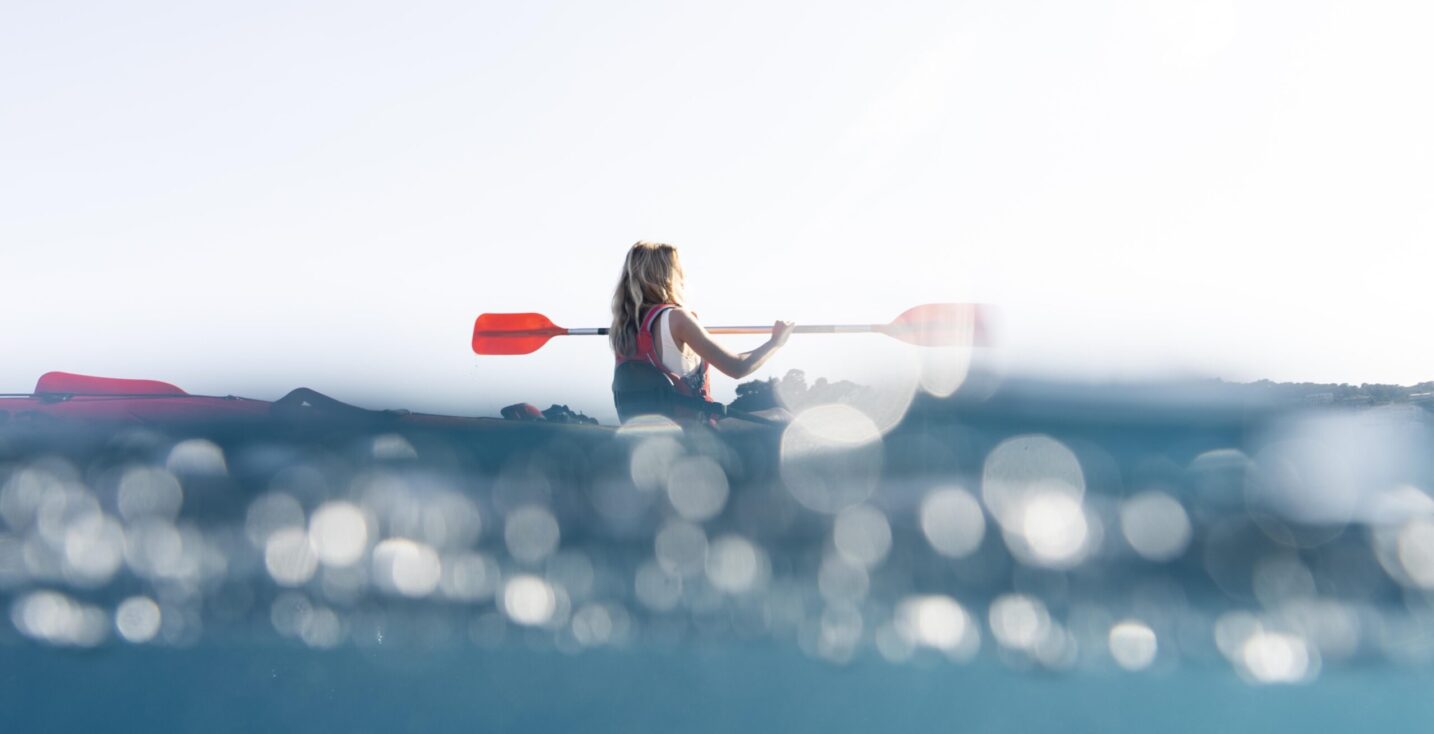
Best Time to Visit Ksamil: Month-by-Month Weather, Crowds, and Prices

There is no single right time to visit Ksamil. There is only the time that matches what you want from the trip. Come in August and you get warm water, a buzzing town, every beach bar open, and crowds so thick you can barely see the sand. Come in late September and you get nearly the same warm sea with a fraction of the people. Come in winter and you get a quiet village with most of its shutters down.

This guide breaks the year down month by month so you can weigh the three things that actually shape a Ksamil trip: the weather, the crowds, and the prices. The short version is that the shoulder months, roughly late spring and early autumn, give most travelers the best balance of all three. Here is the full picture.

Shoulder season brings less people
Off season in Ksamil

The quick answer

For the best balance of warm weather, swimmable sea, and breathing room on the beach, aim for June or September. The water is warm, the town is open and lively, and the crowds are far lighter than the July-to-August peak.

If you want the absolute liveliest atmosphere with every beach club running and the warmest sea, come in July or August, and accept the crowds and higher prices that come with it.

If you want quiet and lower prices and do not mind cooler, less predictable weather, the shoulder edges of May and October still work, though some businesses will be winding up or down.

Outside roughly April to October, Ksamil largely goes to sleep. The weather turns cool and wet, many places close, and the beach scene shuts down.

Ksamil’s climate in brief

Ksamil has a hot-summer Mediterranean climate: hot, dry summers and mild, wet winters. Summer daytime highs sit around 30 to 31 degrees Celsius in July and August, easing into the mid-20s in the shoulder months and dropping to the low teens in the depths of winter. The sea follows the air with a lag, warming from cool spring water into the mid-20s Celsius by August before slowly cooling again.

The other defining feature is rainfall. Summers are very dry, with July seeing barely any rain, while late autumn and winter are genuinely wet, with November the rainiest month by a wide margin. So summer gives you sun you can count on, and the off-season comes with real risk of grey, rainy days.

Month by month

April: early and quiet

Spring is arriving but the town has not woken up fully. Days are mild and pleasant for exploring places like Butrint, but the sea is still cold for swimming and evenings call for a jacket. You will have the beaches largely to yourself, though some beach businesses have not opened yet. A good month for sightseeing and quiet, less so for a classic beach holiday.

May: warming up, still calm

May is lovely and noticeably warmer, with comfortable days in the low-to-mid 20s. The crowds are still light, so you can walk onto the beaches and actually see the famous white sand. The catch is that the sea is still on the cool side for many people and the occasional rainy or overcast day is possible, especially early in the month. Not every beach club will be open or at full tilt, but the value and the calm are real.

June: the sweet spot begins

June is where many regulars say the magic starts. The weather is reliably warm, the sea has warmed up enough to swim comfortably, and the town is open and humming without the full peak-season crush. You get genuinely good beach weather with far more space than high summer. If you want one word for June, it is balance.

July: hot, dry, and busy

July brings the hottest, driest weather of the year and a warm, inviting sea. Everything is open, the beach clubs are in full swing, and the energy is high. It is also when the crowds and prices climb sharply. Expect packed beaches, sunbeds crammed together, and a real need to book accommodation well ahead. Wonderful if you want the lively version of Ksamil, demanding if you want space.

August: peak of everything

August is the absolute peak: the warmest sea of the year, the liveliest atmosphere, and the largest crowds. This is the month visitors most often describe as overwhelming, with beaches so full you struggle to find a patch of sand and prices at their highest. If you come in August, embrace the buzz, book everything in advance, and get to the beach early to claim a spot.

September: the other sweet spot

For a lot of experienced visitors, September is the best month of all. The summer heat eases to very comfortable levels, but the sea stays warm, often warmer than in June, because it has had all summer to heat up. The crowds thin out noticeably, especially later in the month, and prices begin to soften. Most places are still open. Warm water, calmer beaches, gentler prices: it is hard to beat.

October: winding down

Early October can still be delightful, with mild days, warm-enough water, and very few people. As the month goes on, the weather grows more unpredictable, rain becomes more likely, and businesses start closing for the season, with mid-October a common turning point. A great choice for a quiet, low-cost escape if you are flexible about the weather and do not mind some places being shut.

November through March: the off-season

This is Ksamil at rest. The weather is cool, windy, and wet, with November the wettest month of all. Most restaurants, beach clubs, and many hotels close, and boat trips to the islands stop. Winters are mild rather than freezing, so it can still be a peaceful time to wander Butrint or enjoy an empty coastline, but it is not a beach holiday in any meaningful sense.

Empty beach during spring season on Albanian riviera.

How crowds and prices track the calendar

The pattern is simple and consistent. Crowds and prices are lowest in spring and late autumn, climb through June, spike hard in July, peak in August, and ease back through September into October. The cheapest beds and the quietest beaches sit at the shoulders of the season; the priciest and busiest land squarely in August.

This is worth thinking about beyond just comfort. Visiting in June or September rather than August can mean a calmer trip and a meaningfully lower bill for the same warm sea, which is a large part of why the shoulder seasons get recommended so often.

A note for travelers who want the shoulder-season advantage

Shoulder season rewards a particular kind of traveler: one who wants warm water and an open town without the peak-season prices and crush. It is also when staying somewhere self-contained pays off. With fewer tourists around, you get more space and a quieter pace, and a place with its own pool and kitchen means you are not dependent on which beach clubs and restaurants happen to be open that week.

Villa Papa suits this rhythm. With four bedrooms, a private pool, two kitchens, and a shaded lanai, it gives a family or group room to settle in and cook, swim, and relax on their own schedule, which is especially handy in the quieter months when the town is calmer. Booking directly for a shoulder-season stay is one way to make the most of the better value those months already offer. It is a five-minute walk from Ksamil Beach, so the warm September sea is right there whenever you want it.

Frequently asked questions

What is the best time to visit Ksamil?

June and September offer the best balance of warm weather, swimmable sea, and lighter crowds. July and August are the warmest and liveliest but also the busiest and most expensive.

When is the sea warmest in Ksamil?

The sea is at its warmest in August, having heated up over the course of the summer. September stays warm too, often more comfortable for swimming than June.

When is Ksamil least crowded?

Outside the July-to-August peak. Spring (April to May) and autumn (late September into October) are much quieter, with August by far the busiest month.

Is Ksamil worth visiting in the off-season?

It can be peaceful for sightseeing at places like Butrint, but it is not a beach destination in winter. Many restaurants, beach clubs, and hotels close from around late October, the weather turns wet and cool, and island boat trips stop.

What is the cheapest time to visit Ksamil?

The shoulder months at the edges of the season, particularly May and October, tend to have the lowest accommodation prices, with June and September offering a strong balance of low-ish prices and good weather.

Does it rain a lot in Ksamil?

Summers are very dry, with July seeing almost no rain. The wet season runs through late autumn and winter, with November the rainiest month, so off-season trips carry a real chance of grey, rainy days.


Pick your month by what you value most: peak buzz and the warmest sea in August, or warm water with room to breathe in June and September. Whenever you go, build in a slow beach day or two; that is what Ksamil does best.

Thinking about a shoulder-season escape? Find your dates at Villa Papa.